
Amazon Affiliate Disclosure
Geronutrition.com may earn a commission from qualifying purchases made through Amazon affiliate links. This does not increase the price paid by the individual.
Cognitive Support for Healthy Aging: Nutrition, Brain Health Supplements and Memory Protection
Cognitive support is not simply about remembering names more easily or feeling mentally sharper for a few hours. In healthy aging, it refers to protecting the biological systems that allow the brain to maintain attention, learning, judgment, language, processing speed, emotional regulation and memory over time.
The aging brain depends on a continuous supply of energy, essential fats, amino acids, vitamins, minerals and protective plant compounds. It also depends on adequate circulation, stable glucose regulation, restorative sleep, physical activity, hearing, social engagement and the control of conditions that can gradually damage blood vessels or nerve tissue.
That is why effective cognitive support cannot be reduced to one capsule, one “brain food” or one laboratory result. It belongs within a wider Longevity Supplements strategy that considers nutritional status, metabolic health, physical resilience and the individual’s changing needs across later life.
This guide explains how nutrition and supplements may support the aging brain, which deficiencies deserve attention, how cognitive support supplements should be evaluated, where popular ingredients tend to be overpromoted, and how emerging diagnostics may make brain-health nutrition more individualized.
Cognitive health is influenced by many factors beyond nutrition. The National Institute on Aging emphasizes the importance of managing chronic conditions, reviewing medications, supporting sleep, staying physically active, addressing hearing or vision problems and maintaining meaningful social and intellectual activity.
Medical and Nutritional Disclaimer
This guide is for educational purposes and does not diagnose, prevent or treat dementia, Alzheimer’s disease, mild cognitive impairment, stroke, depression, nutritional deficiency or another medical condition.
Persistent memory changes, confusion, changes in judgment, personality changes or difficulty managing familiar tasks require professional assessment. Supplements should not replace prescribed treatment, laboratory testing or a clinician-led diagnostic evaluation.
Quick Picks: Navigate the Cognitive Support Guide
Use the links below to jump directly to each major section of the article.
Cognitive Support Foundations
What Is This Cognitive Support Guide For?
What Does Cognitive Support Mean?
The Core Systems Behind Cognitive Support
Cognitive Support Is a Whole-Body Strategy
Cognitive Support Nutritional Risk Assessment
Food and Brain Nutrition
Cognitive Support Starts With the Food Pattern
Blood Sugar, Insulin Resistance and Cognitive Support
Cognitive Supplements and Ingredient Evaluation
Cognitive Support Supplements: Where Do They Fit?
Brain Health Supplements: Nutrient and Compound Review
Memory Supplements vs Nootropics
What Supplements Help Memory and Brain Health?
Decision-Making and Product Safety
Cognitive Support Decision Framework
How to Evaluate Brain Health Supplements
Safety, Medication Interactions and Red Flags
Emerging Research and Practical Planning
Upcoming Trends and Latest Technology in Cognitive Support
A Practical 30-Day and 90-Day Cognitive Support Plan
Cognitive Support Strategy Comparison Chart
Reader Questions and Editorial Perspective
Frequently Asked Questions About Cognitive Support
People Also Ask About Cognitive Support
Editorial Insights: The Future of Cognitive Support
What Is This Cognitive Support Guide For?
This guide is designed to help individuals understand the nutritional foundations of memory, attention and long-term brain health.
It is not a list of products claiming to increase intelligence. It is a decision framework for identifying which aspect of cognitive support may deserve attention.
The guide helps an individual:
- Distinguish ordinary age-related changes from symptoms that require assessment.
- Review dietary patterns that influence brain energy, circulation and inflammation.
- Understand how vitamin B12, omega-3 fats, folate, vitamin D, magnesium and other nutrients relate to neurological function.
- Compare food-first strategies with cognitive support supplements.
- Recognize when supplements are unlikely to solve the underlying problem.
- Evaluate memory products without relying on marketing language.
- Prepare more useful questions for a physician, dietitian, pharmacist or laboratory discussion.
- Build a repeatable cognitive longevity strategy instead of frequently changing products.
The objective is not constant mental stimulation. It is resilience: maintaining the capacity to think, adapt, remember and make decisions despite the biological pressures associated with aging.
Who Needs Cognitive Support?
Cognitive support is relevant to almost everyone approaching later life, but the type of support required differs considerably.
Adults entering midlife
Midlife is often the period when long-term risks become measurable. High blood pressure, insulin resistance, inadequate sleep, smoking, inactivity and poor diet may not immediately produce obvious memory symptoms, but they can influence the vascular and metabolic environment in which the brain ages.
The most valuable approach at this stage is usually prevention: improving dietary quality, preserving muscle, controlling cardiovascular risk and correcting verified deficiencies.
Older adults experiencing subtle cognitive changes
Occasional word-finding difficulty or temporarily forgetting where an object was placed may occur with normal aging. Greater concern is warranted when changes become frequent, progressive or disruptive.
Examples include:
- Repeating the same questions.
- Missing bills or appointments.
- Becoming lost in familiar places.
- Struggling with familiar devices or recipes.
- Showing unusual difficulty following conversations.
- Experiencing marked personality or judgment changes.
A supplement should not be used to delay evaluation of these symptoms.
Individuals with restrictive diets
People following vegan, highly restrictive, low-calorie or poorly planned diets may have a higher probability of gaps in vitamin B12, protein, iodine, iron, zinc, omega-3 fats or other nutrients.
Risk depends on the exact diet, absorption capacity, supplementation pattern and overall food quality.
Individuals taking medications that affect nutrient status
Certain medications may alter appetite, digestion, absorption, glucose regulation, alertness or nutrient metabolism. For example, long-term metformin use and acid-suppressing medications may contribute to vitamin B12 concerns in some individuals. Medication-related cognitive effects may also be mistaken for nutritional decline.
A medication and supplement review is therefore often more useful than adding another memory formula.
People with reduced appetite or unintentional weight loss
Poor appetite can reduce intake of protein, essential fats and micronutrients at the same time. The resulting fatigue, weakness and reduced engagement may resemble or amplify cognitive decline.
Individuals managing multiple healthy-aging priorities
Brain health rarely exists in isolation. Nutrition that supports cognition must often accommodate muscle preservation, cardiovascular health, glucose control and skeletal strength. For example, calcium, vitamin D, magnesium, protein and resistance training may connect cognitive resilience with the wider approach described in Bone Supplements.
What Does Cognitive Support Mean?
Cognitive support means preserving the conditions under which the brain can operate effectively.
It can be divided into five practical domains.
Memory support
Memory includes several processes:
- Encoding information.
- Consolidating it into storage.
- Retrieving it later.
- Associating it with existing knowledge.
- Updating it when new information appears.
A person who is sleep-deprived may encode information poorly. Someone with severe anxiety may fail to retrieve information under pressure. A person with hearing loss may never clearly receive the information being discussed. All three may describe the experience as “memory loss,” yet the underlying mechanisms differ.
Attention and concentration
Attention determines what information receives enough mental processing to become usable. Low mood, pain, medication effects, poor sleep, dehydration, fluctuating glucose and excessive stimulation can all weaken concentration.
Executive function
Executive function includes planning, prioritizing, inhibiting impulses, solving problems and shifting between tasks. It is essential for medication management, driving, cooking, financial decisions and independent living.
Processing speed
Processing speed describes how quickly a person can receive, interpret and respond to information. Slower processing does not necessarily mean reduced intelligence, but it can affect confidence and daily performance.
Cognitive resilience
Cognitive resilience is the ability to maintain function despite age-related biological change or disease burden. Nutrition contributes to this resilience, but so do education, exercise, social engagement, sleep, sensory function and cardiovascular health.
The Core Systems Behind Cognitive Support
The brain should not be treated as an isolated organ. It is continuously influenced by circulation, metabolism, digestion, endocrine signals, immune activity and skeletal muscle.
| Biological system | Cognitive role | Nutritional relevance | Common disruption |
|---|---|---|---|
| Cerebral circulation | Delivers oxygen and nutrients | Potassium-rich foods, unsaturated fats, fiber and sodium balance | Hypertension, smoking, vascular disease |
| Glucose regulation | Provides usable energy | Meal composition, fiber, protein and carbohydrate quality | Insulin resistance, large glucose fluctuations |
| Neuronal membranes | Supports signaling and cell structure | DHA, phospholipids and adequate dietary fats | Poor fat intake, low fish consumption |
| Neurotransmitter synthesis | Supports attention, mood and memory | Amino acids, B vitamins, iron and choline | Deficiency, low protein intake |
| Myelin maintenance | Supports rapid nerve conduction | Vitamin B12, essential fats and adequate energy | B12 deficiency, neurological disease |
| Mitochondrial function | Produces cellular energy | Broad micronutrient sufficiency | Undernutrition, metabolic dysfunction |
| Antioxidant defense | Limits oxidative damage | Polyphenols, carotenoids and micronutrients | Smoking, poor dietary variety |
| Gut-brain signaling | Influences immune and metabolic communication | Fiber, fermented foods and diverse plant intake | Low-fiber diet, illness, antibiotic exposure |
| Muscle-brain interaction | Supports glucose disposal and activity | Protein, vitamin D and resistance exercise | Sarcopenia, inactivity |
| Sleep regulation | Supports memory consolidation | Meal timing, caffeine control and adequate nutrition | Apnea, insomnia, alcohol, medication effects |
Benefits of Cognitive Support
The most realistic benefits of cognitive support are gradual and systemic rather than dramatic.
Better nutritional adequacy
A structured brain-health plan can expose gaps in protein, vitamin B12, omega-3 intake, plant diversity or overall energy intake.
Improved energy stability
Balanced meals may reduce the cycle of post-meal lethargy, hunger, irritability and concentration difficulty that some individuals experience with irregular or carbohydrate-dominant eating patterns.
Greater diagnostic clarity
Documenting symptoms, medications, diet and laboratory results can separate a probable nutrient issue from sleep deprivation, depression, thyroid disease, hearing loss or neurological illness.
Support for vascular health
The same eating patterns that help manage blood pressure, lipids and glucose may also support the blood vessels supplying the brain.
Improved supplement decisions
A framework reduces the likelihood of combining several products with overlapping ingredients or using high doses without a defined reason.
Support for independence
Preserving judgment, attention, mobility and memory helps protect practical independence, including cooking, medication use, communication and financial management.
Individuals exploring broader healthy-aging nutrition can use the Geronutrition Homepage as the central route to related nutrition, supplement and biomarker guides.
Cognitive Support Benefits Chart
| Potential benefit | Expected time horizon | Best indicator of progress |
|---|---|---|
| Correction of a nutrient deficiency | Weeks to months | Laboratory normalization and symptom review |
| Improved meal-related energy | Days to weeks | Fewer energy crashes and better concentration |
| Better sleep-linked cognition | Weeks | Improved alertness and morning function |
| Improved dietary quality | Weeks to months | Higher plant diversity and better nutrient coverage |
| Reduced supplement confusion | Immediate | Simpler, documented supplement plan |
| Long-term cognitive resilience | Years | Preserved function and controlled risk factors |
How the Aging Brain Changes
Normal brain aging is highly variable. Some people retain strong memory and reasoning deep into later life, while others experience earlier changes because of genetics, vascular disease, sensory loss, illness, medication burden or social factors.
Several processes may become relevant.
Blood vessels may become less resilient
Damage to small cerebral vessels can affect processing speed, attention and executive function. This is one reason blood pressure and glucose management belong in cognitive support rather than being treated as unrelated medical goals.
Energy use may become less flexible
The brain has high energy requirements. Insulin resistance, poor circulation, sleep disruption and mitochondrial stress may reduce the efficiency with which brain cells manage energy.
Inflammatory signaling may increase
Inflammation is not automatically harmful; it is part of normal immune defense. The concern is chronic, poorly regulated inflammatory signaling associated with metabolic disease, smoking, inactivity and some chronic conditions.
Nutrient absorption may become less reliable
Reduced stomach acid, intestinal disease, medication effects, dental problems and appetite loss can make it harder to obtain or absorb nutrients even when food choices appear adequate.
Sensory changes may increase cognitive workload
Hearing or vision difficulty forces the brain to spend more effort interpreting incomplete information. This leaves fewer cognitive resources for memory and conversation.
Medication burden may affect alertness
Some sedating, anticholinergic or interacting medications can contribute to confusion or memory difficulty, particularly in older adults. The National Institute on Aging notes that anticholinergic effects may contribute to confusion and memory problems, reinforcing the importance of medication review.
Cognitive Support Is a Whole-Body Strategy
Cognition is affected by conditions that may initially appear unrelated to the brain.
A person may report “brain fog” while the more relevant issue is:
- Poor sleep caused by sleep apnea.
- Iron deficiency or anemia.
- Vitamin B12 deficiency.
- Thyroid dysfunction.
- Depression.
- Hearing loss.
- Medication sedation.
- Dehydration.
- Inadequate calorie or protein intake.
- Severe glucose fluctuation.
- Chronic pain.
- Infection.
- Alcohol use.
- Social isolation.
This produces an important principle:
The more sudden, severe or functionally disruptive the symptom, the less appropriate it is to begin with a retail supplement.
Cognitive Support Nutritional Risk Assessment
Before comparing products, assess the individual’s nutritional context.
| Assessment area | Questions to consider | Possible next step |
|---|---|---|
| Dietary variety | Are vegetables, fruit, legumes, whole grains, nuts and protein foods eaten regularly? | Create a seven-day food record |
| Animal-food intake | Are fish, eggs, dairy or meat excluded? | Review B12, protein, iodine and omega-3 coverage |
| Appetite | Has food intake declined? | Investigate weight loss, dental issues and illness |
| Digestion | Are there chronic bowel symptoms or malabsorption concerns? | Clinical evaluation |
| Medication use | Could a medicine alter B12 status, alertness or appetite? | Pharmacist or physician review |
| Alcohol | Is intake frequent or increasing? | Quantify intake and discuss risk |
| Sleep | Is snoring, insomnia or daytime sleepiness present? | Sleep assessment |
| Glucose control | Are diabetes, prediabetes or large meal-related energy changes present? | Glucose and metabolic review |
| Sensory health | Is hearing or vision declining? | Hearing and eye evaluation |
| Function | Are familiar daily activities becoming difficult? | Cognitive and medical assessment |
Cognitive Support Starts With the Food Pattern
The strongest nutritional approach is rarely a collection of isolated “brain foods.” It is a dietary pattern that repeatedly delivers fiber, unsaturated fats, vitamins, minerals, polyphenols and sufficient protein.
Mediterranean, DASH and MIND-style eating patterns are frequently studied in relation to cognitive aging. Observational findings are often favorable, but intervention results are more nuanced. In a three-year randomized MIND-diet trial, both the intervention and comparison groups improved, and the groups did not differ significantly in cognitive or brain-imaging outcomes. That result does not make the diet irrelevant; it shows how difficult it is to isolate one dietary pattern from weight change, counseling and other healthy behaviors.
A practical cognitive-support plate
A flexible meal structure can include:
- Half the plate from vegetables, with frequent leafy greens and varied colors.
- A substantial protein source.
- High-fiber carbohydrates when tolerated and appropriate.
- Unsaturated fats from olive oil, nuts, seeds, avocado or fish.
- Fruit, berries or another minimally processed plant food.
- Water or an unsweetened beverage.
Foods with strong strategic value
| Food category | Key contribution | Practical examples |
|---|---|---|
| Fatty fish | DHA, EPA and protein | Salmon, sardines, trout, mackerel |
| Leafy greens | Folate, carotenoids and vitamin K | Spinach, kale, collards |
| Berries | Anthocyanins and other polyphenols | Blueberries, strawberries, blackberries |
| Legumes | Fiber, folate, magnesium and protein | Lentils, chickpeas, beans |
| Nuts and seeds | Unsaturated fats, minerals and fiber | Walnuts, almonds, chia, flax |
| Eggs | Choline, B12 and protein | Eggs prepared with limited added saturated fat |
| Fermented foods | Microbial metabolites and food diversity | Yogurt, kefir, fermented vegetables |
| Whole grains | Fiber and steady meal structure | Oats, barley, brown rice |
| Extra-virgin olive oil | Monounsaturated fat and polyphenols | Dressings and low-to-moderate heat cooking |
| Colorful vegetables | Carotenoids and polyphenols | Peppers, tomatoes, broccoli, carrots |
Brain Nutrition for Seniors
Brain Nutrition for Seniors requires more than adding berries or fish to an otherwise inadequate diet. Older adults face challenges that can change the nutritional plan.
Protein becomes strategically important
Protein supports muscle, immune function, enzymes and neurotransmitter precursors. Muscle also acts as an important site for glucose disposal. Loss of muscle may therefore weaken both physical resilience and metabolic stability.
Protein should generally be distributed across the day rather than concentrated in one evening meal. Individual targets should account for body size, kidney function, activity level, appetite and medical conditions.
Energy intake may become too low
An individual can eat “healthy” foods while still consuming too little total energy. Persistent under-eating may produce weakness, weight loss, micronutrient inadequacy and reduced participation in mentally stimulating activities.
Texture and convenience matter
Dental problems, fatigue, arthritis and limited cooking ability may reduce intake. Nutritional quality sometimes improves when foods are easier to open, chew, prepare and portion.
Useful options include:
- Yogurt with berries and ground seeds.
- Eggs with vegetables and whole-grain toast.
- Lentil soup with olive oil.
- Canned salmon or sardines.
- Smooth nut butter.
- Frozen vegetables.
- Prewashed greens.
- Low-sodium beans.
- Fortified cereals where appropriate.
Hydration should not be overlooked
Thirst perception may weaken with age. Dehydration can contribute to fatigue, dizziness and confusion, although fluid recommendations must be individualized for people with heart, kidney or endocrine conditions.
Omega-3 for Cognitive Health
Omega-3 for cognitive health is one of the most searched areas of brain nutrition.
DHA is a structural component of neuronal membranes, while EPA and DHA participate in signaling pathways related to inflammation and cardiovascular function. This overlap helps explain why omega-3 fatty acids are frequently discussed alongside broader inflammation supplements intended to support healthy aging. Their biological importance, however, does not guarantee that taking more fish oil will noticeably improve memory.
Research often finds a more favorable relationship between regular fish consumption and cognitive outcomes than between omega-3 capsules and cognition. NCCIH notes that omega-3 supplement trials have not consistently improved cognitive functioning in older adults without dementia and have not been shown to treat Alzheimer’s disease.
A 2026 randomized trial added another layer of caution. High-dose DHA increased DHA delivery into the central nervous system in cognitively unimpaired older adults with low omega-3 intake, but it did not produce measurable improvements in cognition or brain structure during the trial period.
When omega-3 supplementation may still deserve consideration
Omega-3 supplementation may be discussed when:
- Fatty fish is rarely consumed.
- Fish cannot be eaten because of preference or access.
- A clinician recommends omega-3 for another indication.
- Overall dietary fat quality is poor.
- A documented plan is being used rather than a vague “memory boost” strategy.
How to read an omega-3 label
Do not evaluate fish oil by the front-label quantity alone.
A bottle may advertise “1,000 mg fish oil,” while the relevant EPA and DHA content is much lower.
Check:
- EPA per serving.
- DHA per serving.
- Number of capsules required.
- Source of oil.
- Allergen information.
- Oxidation and quality testing.
- Added vitamins such as A or D.
- Interaction risk with anticoagulant or antiplatelet treatment.
Food-first intake remains a reasonable default because fish supplies protein, selenium, vitamin D and other nutrients alongside omega-3 fats.
Vitamin B12 and Brain Health
Vitamin B12 and Brain Health deserves special attention because deficiency can affect blood formation and neurological function.
Vitamin B12 is involved in:
- DNA synthesis.
- Red blood cell formation.
- Homocysteine metabolism.
- Myelin maintenance.
- Normal neurological function.
B12 deficiency may produce fatigue, numbness, tingling, balance changes, anemia, mood changes or cognitive symptoms. Neurological effects can occur even when anemia is not obvious.
Who may be at increased risk?
- Vegans who do not use reliable fortified foods or supplements.
- Older adults with impaired absorption.
- Individuals with pernicious anemia.
- People with gastrointestinal surgery or disease.
- Long-term users of certain acid-suppressing medicines.
- Some individuals taking metformin.
- People with unexplained anemia or neurological symptoms.
Why serum B12 alone may not answer every question
A serum vitamin B12 result may require interpretation alongside symptoms, blood counts and, in selected cases, methylmalonic acid or homocysteine.
Homocysteine is not specific to B12 status. It may also be influenced by folate, vitamin B6, kidney function, age and other factors.
B12 supplementation is not a universal memory enhancer
Correcting a deficiency is different from taking high-dose B12 despite adequate status.
A person who is B12 deficient may benefit greatly from correction. A person with adequate B12 and progressive memory loss requires a broader evaluation rather than assuming that a larger dose will improve cognition.
Cognitive Health Supplements: Where Do They Fit?
Cognitive supplements fit best when they address a defined nutritional gap, a plausible dietary limitation or a clinician-identified need.
They fit poorly when they are used as a substitute for diagnosis.
The evidence hierarchy
| Evidence level | Intervention type | Practical interpretation |
|---|---|---|
| Highest clinical relevance | Correcting a confirmed deficiency | Directly addresses a measurable problem |
| Strong foundation | Improving overall dietary quality | Supports multiple brain-related systems |
| Potentially useful | Supplementing a predictable dietary gap | Appropriate when food intake is limited |
| Promising but conditional | Multivitamin-mineral use in selected older adults | Benefits may be modest and population-dependent |
| Mixed | Omega-3 capsules for general cognitive protection | Biological rationale exceeds consistent clinical benefit |
| Weak or inconsistent | Ginkgo, proprietary memory blends and many herbal combinations | Avoid strong claims |
| Unsupported | Products promising dementia prevention or rapid memory restoration | Marketing exceeds evidence |
Large COSMOS cognitive studies found modest benefits from daily multivitamin-mineral supplementation in older adults, including effects on global cognition and episodic memory. These findings are promising, but they do not prove that every multivitamin, dose or population will receive the same benefit.
A supplement should have a job description
Before using a product, complete this sentence:
“I am taking this because it is intended to address ________, and I will evaluate it using ________.”
Good answers include:
- A verified vitamin B12 deficiency.
- Inadequate intake of a specific nutrient.
- A clinician-recommended indication.
- A documented short trial with defined outcomes.
Weak answers include:
- “It says brain health on the bottle.”
- “It contains more ingredients.”
- “The advertisement used a doctor.”
- “The dose looks powerful.”
- “It is expensive, so it must be better.”
Brain Health Supplements: Nutrient and Compound Review
Brain health supplements differ substantially in evidence, purpose and safety.
Multivitamin and mineral supplements
A multivitamin may help close modest gaps, particularly when appetite or dietary variety is limited. It should not be treated as permission to neglect food quality.
Look for:
- Age-appropriate formulation.
- Moderate rather than extreme doses.
- Clear vitamin and mineral amounts.
- Avoidance of unnecessary stimulant blends.
- Consideration of iron needs.
- Compatibility with other supplements.
Folate
Folate supports one-carbon metabolism and red blood cell formation. Low folate status can elevate homocysteine, but lowering homocysteine with folic acid and B12 has not consistently translated into improved cognition.
High-dose folic acid can also obscure hematological signs of B12 deficiency while neurological injury continues, making balanced assessment important.
Vitamin D
Vitamin D receptors are present in many tissues, and low vitamin D status often coexists with poor health, limited outdoor activity and frailty. That association does not prove that high-dose vitamin D improves memory.
Supplementation should be based on overall need, dietary intake, sun exposure, bone health and laboratory context.
Magnesium
Magnesium participates in energy metabolism, nerve transmission and muscle function. Deficiency should be corrected, but magnesium products marketed specifically as memory enhancers often rely on mechanistic claims that exceed direct clinical evidence.
Different forms vary in elemental magnesium content and gastrointestinal tolerance.
Choline
Choline contributes to phospholipids and acetylcholine synthesis. Eggs, soy foods, meat, fish and some legumes provide choline.
The presence of choline in a cognitive formula does not establish that the formula improves memory. Intake, dose, form and baseline nutritional status still matter.
Iron
Iron supports oxygen transport and many enzymes. Both deficiency and excess are undesirable.
Iron should generally not be added to a brain-health plan without a reason. Ferritin, blood counts, inflammation, bleeding risk and medical history influence interpretation.
Zinc
Zinc supports immune function and numerous enzymes. Excess supplemental zinc may interfere with copper status, making long-term high-dose use inappropriate without oversight.
Ginkgo biloba
Ginkgo remains one of the most recognizable memory supplements, yet large studies have not shown that it prevents dementia or reliably slows cognitive decline. It may also interact with medications that influence bleeding.
Curcumin
Curcumin has antioxidant and anti-inflammatory biological properties, but formulation, absorption, dose and trial quality vary. It should not be presented as a proven dementia-prevention treatment.
Bacopa monnieri
Bacopa is often marketed for memory and learning. Some trials suggest possible effects, but products vary in extract standardization and gastrointestinal side effects are possible.
It should be treated as an optional compound with incomplete evidence rather than a nutritional foundation.
Phosphatidylserine
Phosphatidylserine is a phospholipid found in cell membranes. Supplement claims frequently rely on small or older studies and should be interpreted conservatively.
Caffeine and stimulant combinations
Caffeine can temporarily increase alertness, but alertness is not the same as better long-term cognition.
Excess caffeine may worsen:
- Sleep.
- Anxiety.
- Palpitations.
- Tremor.
- Blood pressure.
- Medication side effects.
A product that improves alertness in the afternoon but weakens sleep at night may produce a net cognitive loss.
Memory Support Supplements
Memory Supplements are frequently sold as if all memory problems share one cause.
They do not.
Match the intervention to the memory process
| Reported problem | Possible contributing factors | Appropriate first step |
|---|---|---|
| “I cannot focus long enough to remember” | Poor sleep, anxiety, pain, medication effects | Assess attention and sleep |
| “I forget conversations” | Hearing loss, distraction, cognitive impairment | Hearing and cognitive evaluation |
| “My memory worsens after meals” | Meal size, glucose fluctuation, poor sleep | Food and metabolic review |
| “I am exhausted and mentally slow” | Anemia, B12 deficiency, thyroid disease, depression | Medical and laboratory assessment |
| “I suddenly became confused” | Infection, stroke, medication toxicity, delirium | Urgent medical care |
| “I slowly repeat questions and miss bills” | Possible cognitive impairment | Formal clinical evaluation |
What a responsible memory supplement can do
A responsible product may:
- Provide nutrients missing from the diet.
- Correct a deficiency under guidance.
- Simplify supplementation when several modest gaps exist.
- Support a broader dietary plan.
What it cannot responsibly promise
A supplement should not promise to:
- Reverse dementia.
- Eliminate Alzheimer’s risk.
- Restore lost brain tissue.
- Replace cognitive testing.
- Guarantee sharper memory.
- Work identically across all ages and conditions.
Memory Supplements vs Nootropics
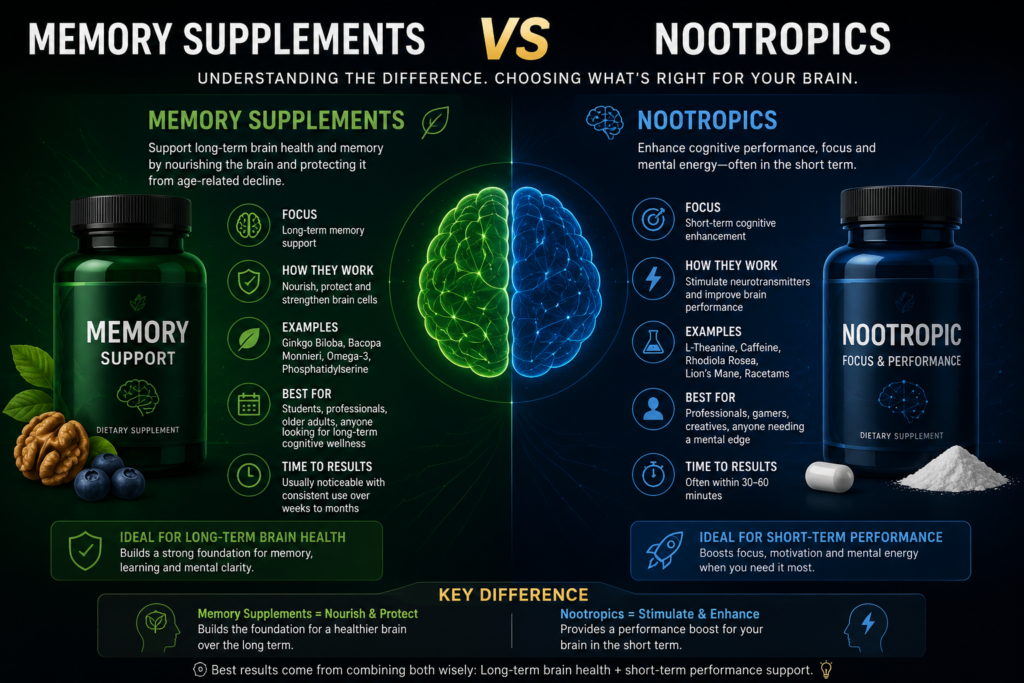
The comparison between memory supplements vs nootropics is often blurred by marketing.
“Memory supplement” usually refers to a product positioned around memory maintenance or healthy aging. “Nootropic” is a broader term used for substances intended to influence attention, alertness, motivation or cognition.
Neither label guarantees evidence or safety.
| Feature | Memory supplements | Nootropics |
|---|---|---|
| Typical positioning | Aging, recall and brain health | Focus, productivity and performance |
| Common ingredients | B vitamins, ginkgo, phospholipids, herbs | Caffeine, amino acids, herbs, cholinergic compounds |
| Expected effect | Gradual support | Often marketed for rapid perception |
| Main risk | Overstated disease-prevention claims | Stimulation, sleep disruption and interactions |
| Best use case | Correcting or covering a defined nutritional need | Limited, cautious use where ingredients are understood |
| Poor use case | Progressive unexplained memory loss | Chronic compensation for sleep deprivation |
| Label problem | Proprietary blends | Stimulant stacking |
| Older-adult concern | Polypharmacy | Blood pressure, sleep and medication interactions |
The stimulation illusion
A person may feel more productive after a stimulant because fatigue is temporarily suppressed. This does not demonstrate improved memory consolidation, better neurological health or slower cognitive aging.
The correct comparison is not:
“Did I feel something?”
It is:
“Did this improve the intended function without worsening sleep, anxiety, blood pressure or medication safety?”
What Supplements Help Memory and Brain Health?
There is no universally best supplement for memory and brain health.
The most appropriate option depends on what is missing, impaired or medically indicated.
When a supplement may be most useful
- Vitamin B12 when deficiency or poor absorption is present.
- A multivitamin-mineral product when dietary gaps are probable and the formulation is appropriate.
- Omega-3 when fish intake is low and supplementation is suitable for the individual’s health and medications.
- Vitamin D when intake, exposure, bone-health needs or laboratory findings justify it.
- Iron, folate or other nutrients when a documented need exists.
When supplements are less likely to solve the problem
- Progressive functional decline.
- Untreated sleep apnea.
- Severe depression.
- Hearing loss.
- Medication toxicity.
- Poorly controlled diabetes.
- Excess alcohol use.
- Stroke or transient ischemic attack.
- Delirium.
- Advanced neurodegenerative disease.
The shortest responsible answer
The supplement most likely to help is the one that corrects a real deficiency without creating a new risk.
Cognitive Longevity
Cognitive Longevity focuses on maintaining usable mental function across decades rather than chasing short-lived enhancement.
The cognitive longevity model
Cognitive longevity can be thought of as the interaction of five reserves:
- Nutritional reserve
Adequate nutrients and energy to maintain tissue and metabolism. - Vascular reserve
Healthy blood vessels capable of delivering oxygen and nutrients. - Metabolic reserve
Capacity to handle glucose, fats and periods of physiological stress. - Functional reserve
Muscle, mobility, balance and the ability to remain active. - Cognitive and social reserve
Education, learning, relationships, purpose and mentally demanding activity.
A supplement may contribute to nutritional reserve. It cannot independently replace the other four.
The reserve model chart
Long-term influence on cognitive resilience

Dietary quality             ████████████████████
Physical activity           ████████████████████
Blood pressure control      ███████████████████
Sleep quality               ██████████████████
Social and mental activity  █████████████████
Deficiency correction       ███████████████
Single nonessential herb    █████
Short-term stimulant effect ███
The chart represents a strategic hierarchy, not a numerical clinical effect size.
Nutrition for Brain Aging
Nutrition for Brain Aging should support several biological tasks at once.
Maintain membrane quality
Neuronal membranes require appropriate fatty acids and phospholipids. Dietary fat quality therefore matters more than simply eating a low-fat diet.
Replace frequent sources of trans fat and excessive saturated fat with:
- Olive oil.
- Nuts.
- Seeds.
- Fish.
- Avocado.
- Other unsaturated-fat foods.
Protect vascular function
The brain receives a large share of cardiac output relative to its size. Dietary patterns that support healthy blood pressure and vascular function are therefore neurologically relevant.
Preserve muscle
Muscle supports glucose regulation, movement and participation in life. A brain-health plan that leads to inadequate protein or unwanted weight loss may be counterproductive.
Support methylation without megadosing
B12, folate, B6, choline and other nutrients participate in one-carbon metabolism. More is not automatically better. Balance and deficiency correction are more defensible than indiscriminate high-dose combinations.
Support antioxidant defenses through diversity
The body uses complex endogenous antioxidant systems. Food-derived polyphenols and carotenoids contribute to a wider nutritional environment, but “antioxidant” should not be treated as a guarantee of clinical benefit.
A varied plant intake is generally more rational than relying on one concentrated extract.
Gut-Brain Axis and Aging
The Gut-Brain Axis and Aging refers to bidirectional communication among the digestive tract, microbiota, immune system, endocrine signals, vagal pathways and central nervous system.
This field is scientifically important but commercially vulnerable to exaggeration.
What the gut-brain axis can influence
Gut-derived metabolites and immune signals may interact with:
- Inflammation.
- Appetite.
- Glucose regulation.
- Mood.
- Stress responses.
- Sleep.
- Blood-brain barrier function.
- Neurotransmitter-related pathways.
What remains uncertain
It is not yet possible to look at a typical commercial microbiome report and reliably prescribe a precise probiotic for memory protection.
Microbiome composition varies with:
- Geography.
- Medication use.
- Diet.
- Age.
- Illness.
- Recent antibiotics.
- Stool collection and laboratory methods.
Research on fiber, prebiotics and precision nutrition is promising, but researchers continue to call for larger randomized trials that account for baseline microbiome differences, intervention type and duration.
A practical gut-brain strategy
Before purchasing an elaborate microbiome stack, strengthen the fundamentals:
- Increase plant variety gradually.
- Eat legumes if tolerated.
- Include whole grains where appropriate.
- Use nuts and seeds.
- Consider fermented foods.
- Avoid unnecessary restrictive diets.
- Address constipation.
- Review medications that affect digestion.
- Introduce fiber gradually and maintain hydration.
Prebiotic and probiotic comparison
| Category | Main function | Food examples | Key limitation |
|---|---|---|---|
| Prebiotic fiber | Feeds selected gut microbes | Onions, garlic, oats, legumes | May initially increase gas |
| Fermented foods | Introduce microbes and fermentation products | Yogurt, kefir, kimchi | Effects vary by product |
| Probiotic supplements | Deliver selected strains | Capsules and powders | Strain-specific evidence |
| Postbiotics | Provide microbial components or metabolites | Emerging products | Definitions and evidence still developing |
| Microbiome testing | Profiles stool organisms | Commercial testing services | Limited ability to prescribe cognition treatment |
Blood Sugar, Insulin Resistance and Cognitive Support
Metabolic health belongs inside cognitive support because the brain depends on stable energy delivery and healthy blood vessels.
Diabetes and insulin resistance may coexist with:
- Hypertension.
- High triglycerides.
- Abdominal adiposity.
- Systemic inflammation.
- Sleep apnea.
- Vascular injury.
- Reduced physical activity.
A person does not need to eliminate all carbohydrates to support cognition. The objective is to improve carbohydrate quality, meal structure and metabolic response.
Useful strategies may include:
- Pairing carbohydrates with protein and fiber.
- Choosing minimally processed starches.
- Reducing sugar-sweetened beverages.
- Avoiding repeated oversized meals.
- Walking after meals when safe.
- Preserving muscle through resistance exercise.
- Monitoring glucose according to clinical guidance.
- Improving sleep.
Individuals managing prediabetes, glucose variability or metabolic aging can explore Blood Sugar Supplements within the broader healthy-aging nutrition system.
Supplements marketed for blood sugar should not be combined casually with diabetes medication because additive effects may produce hypoglycemia or other complications.
Cognitive Support Decision Framework
The following framework prevents random product stacking.
Step 1: Define the target
Choose one primary target:
- Correcting a deficiency.
- Improving dietary adequacy.
- Supporting fish-free omega-3 intake.
- Addressing low appetite.
- Reducing meal-related energy fluctuations.
- Supporting healthy aging without a diagnosed deficiency.
- Preparing for medical evaluation.
Step 2: Identify the evidence category
Ask whether the intervention is:
- Deficiency correction.
- Dietary replacement.
- Risk-factor support.
- Symptom management.
- Short-term stimulation.
- Experimental optimization.
Step 3: Check for alternative explanations
Review:
- Sleep.
- Mood.
- Medications.
- Alcohol.
- Hearing.
- Vision.
- Glucose.
- Thyroid function.
- Anemia.
- Infection.
- Neurological symptoms.
Step 4: Review safety
Check:
- Prescription medications.
- Kidney and liver conditions.
- Bleeding risk.
- Surgery dates.
- Allergies.
- Duplicate nutrients.
- Upper intake limits.
- Swallowing difficulty.
Step 5: Establish a measurable outcome
Possible outcomes include:
- Laboratory correction.
- Improved dietary intake.
- Reduced fatigue.
- Better sleep.
- Fewer skipped meals.
- Improved functional performance.
- A standardized cognitive assessment.
Avoid using vague feelings as the only measure, especially for expensive products.
Step 6: Set a review date
A supplement without a review date can become a permanent habit without evidence that it is still needed.
How to Evaluate Brain Health Supplements
The supplement facts panel is more important than the front label.
Look for transparent quantities
Avoid products that hide most ingredients inside a proprietary blend.
Without quantities, it is difficult to assess:
- Whether the dose is meaningful.
- Whether ingredients overlap with other products.
- Whether the formulation approaches an unsafe level.
- Which ingredient may have caused an adverse effect.
Prefer a coherent formula
A product with 25 ingredients is not automatically more advanced than a product with three.
Complex formulas increase the possibility of:
- Interactions.
- Duplicate ingredients.
- Unnecessary stimulants.
- Gastrointestinal effects.
- Inability to identify the cause of a reaction.
Check third-party verification
Independent verification may help confirm identity, manufacturing quality and label accuracy. Examples include recognized programs such as USP Verified or NSF certification, depending on product category and availability.
Third-party testing does not prove that a product improves memory. It addresses quality, not clinical effectiveness.
Evaluate the dose, not the ingredient list
An ingredient can be present in an amount too small to resemble the quantity used in research.
The opposite problem also occurs: extremely high doses may be used to make a formula appear more powerful.
Review capsule burden
A product requiring several large capsules may be unsuitable for an older person with swallowing difficulty, poor adherence or an already complicated medication schedule.
Examine commercial language
Be cautious with claims such as:
- Clinically proven brain formula.
- Neuro-regeneration.
- Prevents memory loss.
- Reverses cognitive aging.
- Doctor-formulated.
- Pharmaceutical strength.
- Age-reversing nootropic.
The presence of scientific vocabulary does not establish that the finished product has been tested.
Safety, Medication Interactions and Red Flags
Cognitive support supplements can create risks, particularly when several products and medications are combined.
Common safety concerns
| Supplement category | Potential concern |
|---|---|
| Ginkgo | Bleeding interactions and uncertain benefit |
| High-dose omega-3 | Gastrointestinal effects and interaction considerations |
| Stimulant nootropics | Insomnia, anxiety, palpitations and blood-pressure effects |
| High-dose vitamin B6 | Nerve injury with excessive chronic intake |
| High-dose zinc | Copper depletion |
| Iron | Toxicity or inappropriate use without deficiency |
| Vitamin E | Bleeding risk at high supplemental doses |
| Magnesium | Diarrhea and accumulation in severe kidney impairment |
| Herbal blends | Variable composition and medication interactions |
| Multiple multivitamins | Duplicate nutrients and excessive total intake |
Red-flag symptoms
Seek urgent medical care for:
- Sudden confusion.
- Sudden trouble speaking or understanding speech.
- New facial drooping.
- Weakness or numbness on one side.
- Sudden loss of balance.
- Sudden vision changes.
- A sudden severe headache.
- Loss of consciousness.
- A seizure.
- Rapidly worsening mental status.
Sudden confusion and speech, balance, vision or one-sided motor changes can be signs of stroke and require emergency action.
Symptoms requiring timely clinical assessment
- Repeated questions.
- Becoming lost in familiar places.
- Difficulty managing finances or medication.
- Progressive word-finding problems.
- Personality changes.
- Hallucinations.
- New balance problems.
- Unexplained weight loss.
- Persistent numbness or tingling.
- Severe depression.
- Declining personal hygiene.
- Increasing dependence in daily tasks.
Upcoming Trends and Latest Technology in Cognitive Support
The next phase of cognitive support is moving away from generic “brain booster” formulas and toward earlier detection, multimodal assessment and personalized nutrition.
Blood-based Alzheimer’s biomarkers
In May 2025, the FDA cleared the first blood test intended to aid clinicians in identifying amyloid pathology associated with Alzheimer’s disease in symptomatic adults being assessed in specialized care. The test was not authorized as a general screening tool or as a stand-alone diagnosis.
This technology could eventually make parts of the diagnostic pathway more accessible than PET imaging or cerebrospinal-fluid testing.
However, the transition requires caution. The FDA later posted a Class II recall involving specified calibrator lots for the Lumipulse pTau217 ratio after concerns about falsely elevated classifications. As of July 15, 2026, the FDA database listed the recall as open.
The lesson is not that blood biomarkers lack value. It is that advanced testing requires:
- Validated assays.
- Quality-controlled laboratories.
- Correct patient selection.
- Clinical interpretation.
- Confirmation when results are uncertain.
- Protection against premature consumer screening.
Digital cognitive assessments
Short smartphone- or tablet-based tests may increasingly help monitor:
- Reaction time.
- Processing speed.
- Working memory.
- Speech patterns.
- Typing behavior.
- Navigation.
- Day-to-day variability.
These tools may be useful for detecting change over time, but performance can be affected by education, language, fatigue, device familiarity, hearing, vision and anxiety.
They should complement rather than replace clinical evaluation.
Wearable-derived cognitive signals
Wearables already measure sleep timing, physical activity, heart rate and, in some devices, blood oxygen or temperature-related signals.
Future systems may combine these patterns to identify periods when cognitive performance is likely to decline. For example, worsening sleep consistency, falling activity and reduced social movement could trigger a recommendation for assessment.
These systems are more likely to function as early-warning tools than as independent diagnostic devices.
Speech and language biomarkers
Changes in word retrieval, sentence complexity, pauses and vocal characteristics may contain information about neurological function.
Remote conversation analysis is being studied as a scalable way to detect cognitive change, although privacy, language bias and false-positive risk remain important concerns.
Precision nutrition
Precision nutrition attempts to integrate:
- Diet.
- Laboratory biomarkers.
- Medication use.
- Genetics.
- Metabolomics.
- Microbiome information.
- Glucose response.
- Physical activity.
- Sleep.
The likely future is not a diet determined by one gene. It is a decision system that identifies which intervention is most relevant to the individual’s dominant risk pattern.
Baseline-status supplementation
Future supplement trials are likely to focus less on giving the same nutrient to everyone and more on recruiting people with:
- Low baseline nutrient status.
- Low dietary intake.
- Specific metabolic phenotypes.
- Defined genetic variants.
- Early biomarker changes.
- Measurable cognitive vulnerability.
This may explain why many past trials produced weak average effects: people who were already nutritionally adequate were combined with people who had greater potential to benefit.
More sophisticated omega-3 research
The 2026 DHA findings suggest that delivering a nutrient to the brain does not automatically improve clinical outcomes. Future omega-3 trials may need to account for:
- Intervention timing.
- APOE genotype.
- Baseline omega-3 status.
- Oxidation and formulation.
- Vascular health.
- Treatment duration.
- Combination with exercise or dietary change.
- More sensitive cognitive and biomarker outcomes.
Multidomain cognitive longevity programs
The most promising model may be a coordinated program combining:
- Nutrition.
- Exercise.
- Blood-pressure management.
- Glucose control.
- Sleep treatment.
- Hearing support.
- Cognitive stimulation.
- Social engagement.
- Medication review.
This model accepts that cognitive aging is produced by interacting systems rather than a single missing ingredient.
Cognitive Support Technology Outlook
| Technology | Current role | Future potential | Main limitation |
|---|---|---|---|
| Plasma pTau and amyloid markers | Aid specialist evaluation | Less invasive diagnostic pathways | Not stand-alone screening |
| Digital cognitive testing | Tracks structured task performance | Frequent remote monitoring | Learning effects and digital bias |
| Wearable analytics | Measures sleep and activity | Early functional-change detection | Indirect cognitive signals |
| Speech analysis | Research and remote assessment | Passive longitudinal monitoring | Privacy and language bias |
| Microbiome profiling | Descriptive and research use | Targeted dietary intervention | Limited clinical standardization |
| Continuous glucose monitoring | Metabolic feedback | Personalized meal planning | Glucose is only one variable |
| Metabolomics | Research and specialist use | Identifying nutrient-response phenotypes | Cost and interpretive complexity |
| Advanced MRI analytics | Specialist and research use | Quantifying brain-aging patterns | Access, cost and incidental findings |
A Practical 30-Day and 90-Day Cognitive Support Plan
First 30 days: build the baseline
| Week | Priority | Action |
|---|---|---|
| Week 1 | Symptom definition | Record memory, attention, sleep, meals, medications and functional changes |
| Week 2 | Dietary assessment | Review protein, fish, plant variety, meal timing and hydration |
| Week 3 | Risk review | Check medications, alcohol, hearing, vision, mood and glucose concerns |
| Week 4 | Professional preparation | Organize questions and discuss persistent symptoms with a clinician |
Days 31–90: implement targeted support
| Domain | Target |
|---|---|
| Food quality | Build repeatable meals around vegetables, protein, fiber and unsaturated fats |
| Protein | Distribute across meals according to individual needs |
| Omega-3 | Include fatty fish or discuss an appropriate alternative |
| B12 | Test or supplement when risk factors justify it |
| Activity | Combine aerobic movement, resistance exercise and balance work |
| Sleep | Maintain regular timing and investigate apnea symptoms |
| Cognition | Continue learning, conversation and meaningful tasks |
| Monitoring | Reassess symptoms, function, adherence and side effects |
| Supplements | Use the smallest coherent regimen addressing defined needs |
The one-change rule
When introducing optional supplements, consider changing one major variable at a time.
Starting five products together makes it difficult to determine:
- Which product helped.
- Which caused a side effect.
- Which was unnecessary.
- Whether the effect came from improved sleep, diet or expectation.
Cognitive Support Strategy Comparison Chart
| Strategy | Main advantage | Main limitation | Best suited to |
|---|---|---|---|
| Food-first brain-health diet | Broad nutritional and metabolic support | Requires sustained behavior | Most individuals |
| Deficiency-guided supplementation | High relevance when deficiency exists | Requires assessment | People with documented need |
| Standard multivitamin | Convenient nutritional coverage | May duplicate nutrients | Older adults with dietary gaps |
| Omega-3 supplementation | Useful when fish intake is low | Cognitive evidence is mixed | Selected individuals |
| Herbal memory formula | Commercially accessible | Variable evidence and interactions | Limited, cautious trial |
| Stimulant nootropic | Rapid alertness | Sleep and cardiovascular concerns | Specific short-term situations |
| Microbiome stack | Targets emerging gut-brain interest | Personalized claims exceed evidence | Research-oriented individuals |
| Multidomain program | Addresses interacting risks | More complex to implement | Long-term cognitive longevity |
Frequently Asked Questions About Cognitive Support
What is the best cognitive support supplement for older adults?
There is no single best cognitive support supplement for all older adults.
The most useful product depends on dietary intake, laboratory findings, medications, medical history and the type of cognitive concern.
Vitamin B12 may be highly important for someone with deficiency or impaired absorption but unhelpful as a memory treatment for someone with adequate status. Omega-3 may help cover low fish intake, but capsules have not consistently improved cognition in clinical trials. A moderate multivitamin may help an older person with limited dietary variety, yet it cannot compensate for untreated sleep apnea, depression or progressive cognitive impairment.
A practical priority order is:
| Priority | Intervention |
|---|---|
| 1 | Investigate progressive or functionally disruptive symptoms |
| 2 | Correct confirmed nutritional deficiencies |
| 3 | Improve overall food quality and adequate energy intake |
| 4 | Address sleep, activity, hearing and metabolic health |
| 5 | Consider a simple supplement for a defined gap |
| 6 | Avoid complex formulas without a measurable purpose |
Do cognitive support supplements really improve memory?
Some may help in defined situations, but the category as a whole should not be treated as proven.
A supplement may improve symptoms when it corrects a deficiency contributing to fatigue, neurological dysfunction or poor concentration. Multivitamin-mineral research in older adults has shown modest cognitive benefits in some trials. In contrast, evidence for ginkgo, omega-3 capsules and many proprietary blends is inconsistent or negative.
The size of the expected benefit also matters. Marketing often implies a noticeable transformation. Clinical research usually examines smaller changes in test performance or the rate of decline.
How long do brain health supplements take to work?
The timeline depends on the reason for use.
| Supplement purpose | Possible evaluation period |
|---|---|
| Correcting deficiency | Several weeks to months |
| Improving dietary coverage | One to three months |
| Addressing low intake | Depends on baseline status |
| Short-term stimulant effect | Hours |
| Long-term cognitive protection | Cannot be judged by immediate sensation |
| Progressive memory loss | Should not wait for a supplement trial |
A person should not postpone medical evaluation for months while waiting for a retail product to work.
Can vitamin B12 improve memory in seniors?
Vitamin B12 can support neurological function and may improve symptoms caused by B12 deficiency. It is not a universal memory-enhancing treatment.
Testing becomes particularly relevant when an older adult has:
- A vegan diet.
- Metformin use.
- Long-term acid suppression.
- Gastrointestinal disease or surgery.
- Macrocytic anemia.
- Numbness or tingling.
- Balance changes.
- Unexplained fatigue.
- Cognitive or mood changes.
Treatment route and dose depend on the cause and severity of deficiency. Severe neurological symptoms warrant professional management.
Are natural memory supplements safer than nootropics?
“Natural” does not mean risk-free.
Herbal products can influence clotting, blood pressure, sedation, glucose or drug metabolism. Product composition may also differ among manufacturers.
Nootropic formulas often add another concern: stimulants may increase alertness while worsening sleep or anxiety.
Safety should be assessed by ingredient, dose, formulation, health condition and medication profile—not by whether the label uses “natural,” “herbal” or “advanced.”
FAQ Evidence Snapshot
Relative confidence for common cognitive-support approaches

Correcting B12 deficiency      ████████████████████
Improving overall diet         ██████████████████
Managing vascular risk         ██████████████████
Selected multivitamin use      ███████████
Omega-3 supplementation        ███████
Ginkgo for dementia prevention ███
Proprietary memory blends      ██
This chart reflects the relative strength of decision logic and available evidence, not a quantified treatment effect.
People Also Ask About Cognitive Support
What foods improve memory and concentration in older adults?
No single food reliably transforms memory. The strongest strategy is a repeated eating pattern that includes vegetables, berries, legumes, whole grains, nuts, seeds, fish, olive oil and sufficient protein.
These foods supply nutrients and compounds involved in:
- Vascular health.
- Membrane structure.
- Energy production.
- Neurotransmitter synthesis.
- Antioxidant defense.
- Gut microbial metabolism.
The food pattern also matters because replacing highly processed foods may be as important as adding a specific berry or seed.
| Meal | Cognitive-support example |
|---|---|
| Breakfast | Yogurt, berries, oats and walnuts |
| Lunch | Lentil and vegetable soup with olive oil |
| Dinner | Salmon, leafy greens and a high-fiber starch |
| Snack | Fruit with nuts or nut butter |
| Plant-based option | Tofu, beans, vegetables and fortified B12 sources |
Is omega-3 or vitamin B12 better for memory?
They serve different biological roles and should not be treated as substitutes.
Vitamin B12 is essential for neurological function and should be corrected when deficiency is present.
Omega-3 fats contribute to neuronal membrane structure, but omega-3 supplementation has produced mixed cognitive results.
The better option is determined by the individual’s status:
- Low B12 or impaired absorption: investigate B12.
- Minimal fish intake: review omega-3 intake.
- Progressive memory changes: obtain clinical assessment.
- Poor overall diet: improve the full dietary pattern.
- Multiple supplements: review duplication and interactions.
What is the difference between normal aging and cognitive decline?
Normal aging may involve taking longer to recall a name or needing more time to learn unfamiliar technology. The information often returns later, and daily independence remains intact.
Potential cognitive decline is more concerning when a person:
- Repeats questions frequently.
- Forgets recent conversations entirely.
- Becomes lost.
- Cannot follow familiar procedures.
- Makes unsafe decisions.
- Struggles with bills or medication.
- Shows progressive personality change.
The difference is not one forgotten word. It is the pattern, progression and effect on daily life. The National Institute on Aging distinguishes ordinary forgetfulness from changes that interfere with everyday function.
Can diet prevent Alzheimer’s disease?
No diet can guarantee prevention.
Healthy eating may influence several modifiable pathways associated with cognitive aging, including blood pressure, glucose control, vascular health, body composition and inflammation. Observational research often links Mediterranean, DASH and MIND-style patterns with better cognitive outcomes, but randomized trials have not established that one diet reliably prevents Alzheimer’s disease.
Diet should therefore be framed as risk support, not immunity.
A credible message is:
A healthy dietary pattern may improve the biological environment in which the brain ages, but it cannot remove every genetic, vascular or neurological risk.
The National Institute on Aging similarly notes that dietary research is promising but does not establish that a specific food or supplement prevents Alzheimer’s disease.
What vitamins are linked to brain fog and poor concentration?
Brain fog is not a medical diagnosis. It may describe fatigue, slow thinking, forgetfulness, low motivation or difficulty concentrating.
Nutrients that may deserve assessment in the right context include:
- Vitamin B12.
- Folate.
- Iron.
- Vitamin D.
- Thiamine.
- Other nutrients in severe dietary restriction or malabsorption.
However, similar symptoms may result from:
- Sleep deprivation.
- Depression or anxiety.
- Thyroid disease.
- Diabetes.
- Infection.
- Medication effects.
- Long COVID.
- Dehydration.
- Hormonal changes.
- Neurological disease.
The symptom should guide an assessment, not automatically trigger a high-dose vitamin stack.
PAA Decision Table
| Search question | Most responsible response |
|---|---|
| What vitamin is best for memory? | The one correcting a genuine deficiency |
| Does fish oil prevent dementia? | Current supplement evidence does not establish prevention |
| Is forgetfulness normal with age? | Mild occasional lapses can be; progressive functional decline is not |
| Can food reverse cognitive decline? | Food supports health but should not be presented as a cure |
| Should seniors take nootropics? | Only after reviewing purpose, evidence, sleep, cardiovascular risk and medications |
Editorial Insights: The Future of Cognitive Support
Cognitive support is entering a more disciplined era.
For years, the commercial market treated brain health as a contest between isolated ingredients: fish oil against ginkgo, choline against phosphatidylserine, one mushroom against another. This approach was convenient for product labels but poorly matched to the biology of cognitive aging.
The aging brain does not fail because it lacks a fashionable compound. Cognitive decline may emerge from decades of vascular stress, metabolic dysfunction, nutritional inadequacy, hearing loss, poor sleep, social withdrawal, medication burden, neurological disease or combinations of these factors.
The next generation of cognitive support will therefore be built around classification rather than hype.
It will ask:
- Is there a nutrient deficiency?
- Is the dominant risk vascular, metabolic, neurological or behavioral?
- Is the symptom primarily memory, attention, processing speed or executive function?
- Is the change stable, fluctuating or progressive?
- Can the intervention be monitored?
- Does the benefit justify the interaction risk?
- Is the individual being supported early enough?
Blood biomarkers, remote cognitive testing, wearable data, metabolomics and precision nutrition may eventually help answer these questions with greater accuracy. Yet technology will not remove the need for clinical judgment. The 2025 clearance and subsequent 2026 recall involving a pTau217 assay illustrate both the promise and the responsibility attached to increasingly sensitive brain-health testing.
For individuals, the most defensible cognitive-support strategy remains clear: eat adequately, preserve muscle, protect vascular and metabolic health, correct real deficiencies, sleep consistently, remain socially and intellectually engaged, and investigate meaningful changes rather than disguising them with an increasingly complicated supplement routine.
The future of brain-health nutrition will not be defined by the largest stack.
It will be defined by the smallest number of well-chosen interventions capable of addressing the right biological problem at the right time.