
Amazon Affiliate Disclosure
Some links on this page may be affiliate links. geronutrition.com may earn a commission at no extra cost to you. This helps support independent research, evidence-based healthy aging content, and longevity nutrition education.
Aging changes the human body in ways that affect metabolism, digestion, muscle maintenance, immunity, brain function, hormone regulation and nutrient absorption. Traditional nutrition guidelines often focus on preventing deficiency diseases but geronutrition goes much further.
Geronutrition is the science of using targeted nutrition, longevity nutrients, metabolic support and healthy aging strategies to improve quality of life as the body ages.
The term combines:
- “Gero” → aging
- “Nutrition” → nourishment and metabolic support
Geronutrition studies how nutritional strategies can help:
- Preserve muscle mass
- Support cognitive performance
- Improve immune resilience
- Reduce inflammation
- Protect mitochondrial function
- Support bone density
- Improve energy metabolism
- Promote healthy aging and longevity
Instead of simply asking:
“Are you getting enough vitamins?”
Geronutrition asks:
- How can nutrition support healthy aging?
- Which nutrients help preserve muscle and mobility?
- Can diet reduce inflammaging and oxidative stress?
- Which supplements support mitochondrial health?
- How does nutrition influence lifespan and biological aging?
As longevity science evolves, geronutrition is becoming one of the fastest-growing areas in preventive health, anti-aging nutrition, cognitive support and age-related disease prevention.
Unlike standard nutrition plans designed for younger adults, geronutrition considers the biological changes that occur with age.
Explore more evidence-based resources inside the Geronutrition.com Homepage and continue with related guides including Nutrition After 60, Aging and Nutrient Absorption, How Aging Changes Metabolism and Healthy Aging Nutrition.
Quick Picks
- What Is Geronutrition?
- Who Needs Geronutrition
- Why Geronutrition Matters After 40, 50 & 60
- How Aging Changes Nutritional Needs
- Geronutrition vs Traditional Nutrition
- Benefits of Geronutrition
- Best Nutrients for Healthy Aging
- Top Longevity Supplements
- Nutrition After 60 Guide
- Inflammaging & Cellular Aging
- Muscle Loss, Sarcopenia & Protein Needs
- Mitochondrial Health & Energy Production
- Costs of Geronutrition Plans & Supplements
- Risks & Common Mistakes
- Latest Trends & Longevity Technology
- Future of Geronutrition
- Gero-Insights
- FAQs
What Is This Guide For?
This guide is designed for:
| Audience | Why Geronutrition Matters |
|---|---|
| Adults over 40 | Early longevity prevention strategies |
| Adults over 60 | Preventing nutrient deficiencies and muscle loss |
| Caregivers | Supporting healthy aging nutrition plans |
| Longevity enthusiasts | Optimizing lifespan and healthspan |
| Fitness-focused seniors | Preserving muscle and metabolic health |
| People with fatigue | Supporting mitochondria and energy production |
| Individuals interested in supplements | Understanding evidence-based longevity nutrients |
| Healthcare researchers | Exploring aging-related nutrition science |
Who Needs Geronutrition?

Many people assume geronutrition only matters after retirement age. In reality, biological aging begins much earlier.
Nutritional interventions become increasingly important after:
- Age 40
- Hormonal changes
- Reduced metabolic flexibility
- Lower muscle protein synthesis
- Digestive inefficiencies
- Increased oxidative stress
- Chronic inflammation
- Sedentary lifestyles
People especially at risk include:
- Older adults with poor appetite
- Individuals with chronic inflammation
- Adults with low protein intake
- Seniors with muscle weakness
- People with vitamin D deficiency
- Adults experiencing cognitive decline
- Individuals with insulin resistance
Why Geronutrition Matters After 40, 50 & 60
Aging alters nearly every major biological system.
Common Age-Related Nutritional Changes
| Biological Change | Nutritional Effect |
|---|---|
| Reduced stomach acid | Lower B12 and mineral absorption |
| Muscle loss | Higher protein requirements |
| Hormonal decline | Altered metabolism and energy |
| Chronic inflammation | Increased oxidative stress |
| Reduced mitochondrial efficiency | Lower energy production |
| Appetite decline | Lower calorie and nutrient intake |
| Reduced insulin sensitivity | Higher metabolic disease risk |
These changes explain why older adults often require:
- Higher protein intake
- More micronutrient density
- Better hydration
- Anti-inflammatory nutrients
- Targeted supplementation
How Aging Changes Nutritional Needs
Geronutrition focuses heavily on biological adaptation.
As the body ages:
- Digestion becomes less efficient
- Nutrient absorption declines
- Lean muscle mass decreases
- Recovery slows
- Oxidative stress increases
- Mitochondrial function weakens
This creates greater demand for:
- Protein
- Omega-3 fatty acids
- Magnesium
- Vitamin D
- Calcium
- Vitamin B12
- Polyphenols
- Antioxidants
Internal linking opportunity:
- Aging and Nutrient Absorption
- Longevity Nutrition Science
Geronutrition vs Traditional Nutrition
Comparison Chart
| Feature | Traditional Nutrition | Geronutrition |
|---|---|---|
| Main Goal | Prevent deficiency | Optimize healthy aging |
| Focus | General population | Aging adults |
| Protein Strategy | Standard intake | Muscle preservation |
| Inflammation | Limited focus | Core focus |
| Mitochondrial Health | Rarely discussed | Major priority |
| Longevity Support | Minimal | Central objective |
| Supplement Integration | Basic | Strategic and targeted |
| Biological Aging | Often ignored | Primary concern |
Geronutrition is not simply “senior dieting.”
It is a longevity-focused nutritional framework designed around the realities of biological aging.
Benefits of Geronutrition
Healthy Aging Benefits
For readers who want a step-by-step framework, see how to use geronutrition to apply these principles in daily life.
1. Supports Muscle Mass & Mobility
Protein optimization and amino acid intake help reduce age-related muscle loss.
2. Improves Cognitive Function
Omega-3 fatty acids, B vitamins, and antioxidants may support brain health and memory.
3. Reduces Inflammaging
Anti-inflammatory nutrients help regulate chronic low-grade inflammation associated with aging.
4. Supports Bone Density
Calcium, magnesium, vitamin D, and vitamin K2 contribute to skeletal health.
5. Enhances Mitochondrial Function
Mitochondria generate cellular energy. Geronutrition prioritizes nutrients that support mitochondrial efficiency.
6. Supports Immune Resilience
Aging weakens immune function. Proper nutrition may help improve immune response.
7. Improves Energy Metabolism
Targeted nutrition may help combat fatigue and metabolic slowdown.
Best Nutrients for Healthy Aging
Longevity Nutrient Table
| Nutrient | Why It Matters | Common Sources |
|---|---|---|
| Protein | Muscle preservation | Fish, eggs, whey, legumes |
| Omega-3s | Brain and heart health | Salmon, sardines, fish oil |
| Vitamin D | Bone and immune support | Sunlight, supplements |
| Magnesium | Energy metabolism | Nuts, seeds, greens |
| Vitamin B12 | Nervous system support | Meat, eggs, supplements |
| Calcium | Bone density | Dairy, fortified foods |
| Polyphenols | Antioxidant protection | Berries, green tea |
| CoQ10 | Mitochondrial energy | Organ meats, supplements |
| Creatine | Muscle and cognition | Red meat, supplements |
Top Longevity Supplements
The healthy aging supplement industry has expanded rapidly as longevity science gains mainstream attention.
Popular Geronutrition Supplements
| Supplement | Common Goal |
|---|---|
| Whey protein | Muscle preservation |
| Creatine monohydrate | Strength and cognitive support |
| Fish oil | Cardiovascular and brain health |
| Magnesium glycinate | Sleep and metabolic support |
| Vitamin D3 + K2 | Bone support |
| CoQ10 | Mitochondrial energy |
| Collagen peptides | Joint and skin support |
| Probiotics | Gut health and digestion |
👉 Explore our evidence-based longevity supplements guides.
Nutrition After 60 Guide
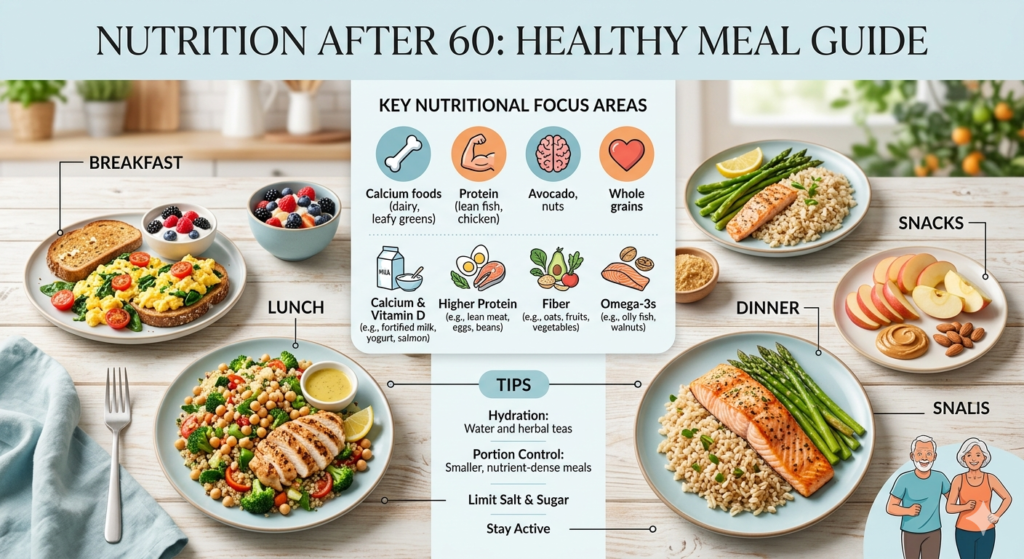
Nutritional priorities often change significantly after age 60.
Key Priorities After 60
- Higher protein intake
- Muscle preservation
- Hydration support
- Bone health optimization
- Improved digestive support
- Cognitive support nutrients
- Blood sugar regulation
Recommended Dietary Focus
| Goal | Recommended Approach |
|---|---|
| Preserve muscle | Protein-rich meals |
| Reduce inflammation | Mediterranean-style eating |
| Improve energy | Mitochondrial nutrients |
| Support cognition | Omega-3s and polyphenols |
| Improve digestion | Fiber and probiotics |
Continue reading: Nutrition After 60
Inflammaging & Cellular Aging
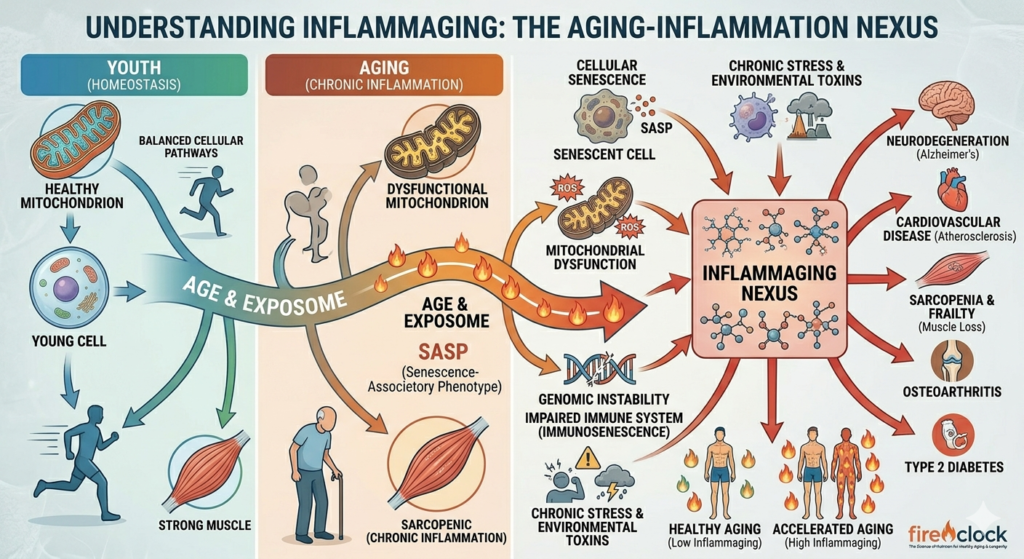
One of the most important concepts in geronutrition is inflammaging.
Inflammaging refers to chronic low-grade inflammation associated with aging.
This process is linked to:
- Cardiovascular disease
- Cognitive decline
- Frailty
- Sarcopenia
- Insulin resistance
- Metabolic dysfunction
Anti-Inflammaging Nutritional Strategies
| Strategy | Purpose |
|---|---|
| Omega-3 intake | Reduce inflammatory signaling |
| Polyphenol-rich foods | Antioxidant support |
| Fiber intake | Gut microbiome support |
| Reduced ultra-processed foods | Lower oxidative stress |
| Healthy sleep | Hormonal regulation |
Learn more in Inflammaging Explained.
Muscle Loss, Sarcopenia & Protein Needs
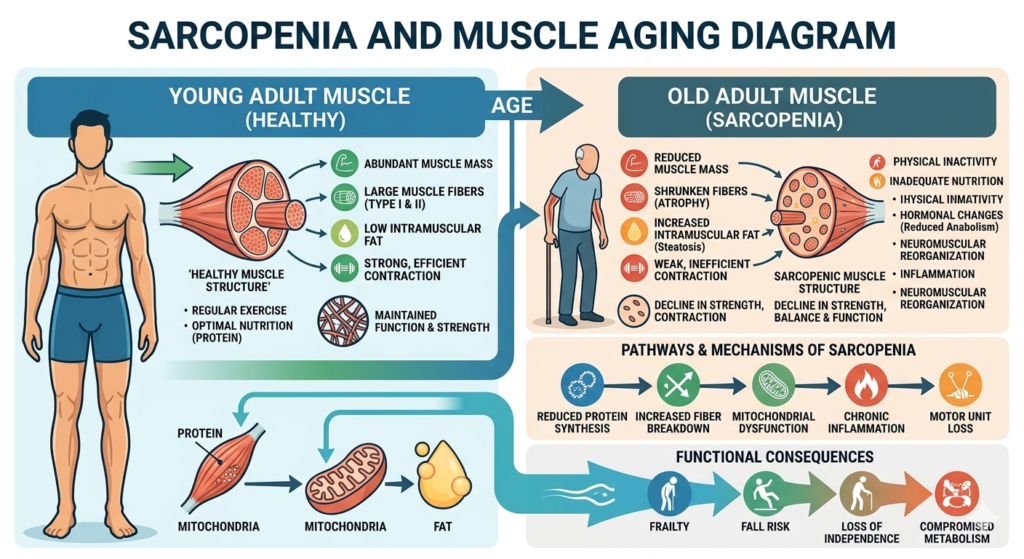
Age-related muscle loss is known as sarcopenia.
This is one of the most serious aging-related conditions because it affects:
- Mobility
- Strength
- Balance
- Independence
- Metabolic health
- Fall risk
Protein Needs Comparison
| Age Group | Approximate Protein Priority |
|---|---|
| Younger adults | Standard maintenance |
| Older adults | Higher protein density |
| Physically active seniors | Elevated muscle-support focus |
Geronutrition emphasizes:
- Protein timing
- Amino acid quality
- Resistance training
- Recovery nutrition
Read more: Sarcopenia and Aging
Mitochondrial Health & Energy Production
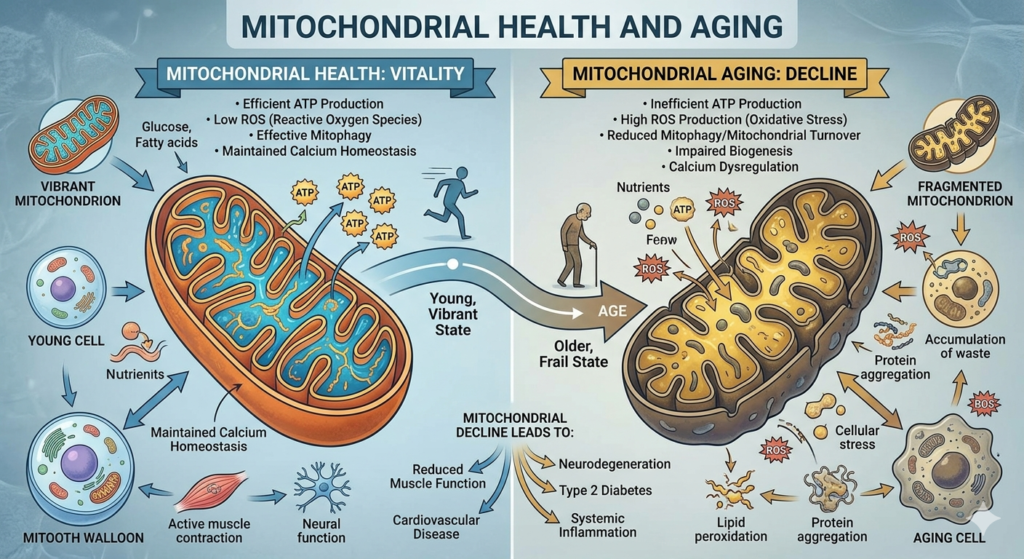
Mitochondria are often described as the energy-producing structures of cells.
As aging progresses, mitochondrial efficiency may decline.
This can contribute to:
- Fatigue
- Reduced endurance
- Cognitive slowing
- Lower metabolic efficiency
Nutrients Commonly Associated With Mitochondrial Support
| Nutrient | Potential Role |
|---|---|
| CoQ10 | Cellular energy support |
| Magnesium | ATP production |
| Alpha-lipoic acid | Antioxidant protection |
| B vitamins | Energy metabolism |
| Creatine | Cellular energy recycling |
Explore more in Mitochondrial Health & Aging.
Costs of Geronutrition Plans & Supplements
Geronutrition can range from affordable whole-food strategies to premium longevity protocols.
Estimated Cost Comparison
| Approach | Approximate Monthly Cost |
|---|---|
| Whole-food healthy aging diet | Low to moderate |
| Basic supplement stack | Moderate |
| Advanced longevity supplements | Moderate to high |
| Personalized testing & nutrition | High |
Cost depends on:
- Supplement quality
- Clinical testing
- Personalized coaching
- Organic food preferences
- Longevity technologies
Risks & Common Mistakes
Geronutrition can provide major benefits, but misinformation is widespread.
Common Risks
| Risk | Why It Matters |
|---|---|
| Excessive supplementation | Nutrient imbalance |
| Low protein intake | Muscle loss risk |
| Ultra-processed “health foods” | Poor nutrient density |
| Restrictive diets | Deficiency risk |
| Ignoring hydration | Fatigue and weakness |
| Unverified anti-aging products | Marketing hype |
Important Reminder
Not every “anti-aging” supplement has strong scientific evidence.
Evidence-based healthy aging focuses on:
- Nutrient density
- Protein adequacy
- Physical activity
- Sleep quality
- Metabolic health
- Long-term consistency
Latest Trends & Longevity Technology
The longevity industry is rapidly evolving.
Current Geronutrition Trends
Personalized Nutrition
DNA analysis, biomarker testing, and continuous glucose monitoring are shaping individualized nutrition plans.
Longevity Supplement Stacks
Combination protocols targeting mitochondria, inflammation, and metabolic health are becoming increasingly popular.
AI-Based Nutrition Platforms
Artificial intelligence tools are now helping analyze:
- Nutrient deficiencies
- Meal patterns
- Metabolic health
- Biological aging markers
Functional Longevity Foods
Foods enriched with:
- Polyphenols
- Adaptogens
- Probiotics
- High-protein formulations
are expanding rapidly.
Healthy Aging Wearables
New wearable technology tracks:
- Sleep quality
- Recovery
- Heart rate variability
- Metabolic response
Upcoming Models & Future of Geronutrition
The future of geronutrition may include:
- AI-driven longevity nutrition planning
- Precision supplementation
- Biological age tracking
- Personalized gut microbiome nutrition
- Advanced mitochondrial therapies
- Smart longevity meal systems
- Digital metabolic monitoring
Researchers are increasingly exploring how nutrition may influence:
- Healthspan
- Frailty prevention
- Cognitive aging
- Cellular resilience
- Epigenetic aging pathways
Related Longevity Science Guides
- Healthy Aging Nutrition
- Longevity Nutrition Science
- How Aging Changes Metabolism
- Aging and Nutrient Absorption
- Nutrient Deficiencies in Older Adults
- Sarcopenia and Aging
- Mitochondrial Health & Aging
Gero-Insights
Geronutrition represents a major shift in how nutrition science approaches aging.
Instead of focusing only on calorie intake or basic deficiency prevention, geronutrition examines how nutrients influence biological aging, muscle preservation, metabolic health, inflammation, cognition, and longevity.
As global populations age and longevity science advances, healthy aging nutrition is becoming increasingly important for maintaining mobility, independence, energy, and long-term quality of life.
The strongest foundations remain remarkably consistent:
- Nutrient-dense whole foods
- Adequate protein
- Physical activity
- Sleep quality
- Stress management
- Evidence-based supplementation
- Long-term metabolic health
Continue exploring the Longevity Science Hub on geronutrition.com to build a deeper understanding of aging, metabolism, healthy nutrition, and longevity-focused wellness.
Frequently Asked Questions (FAQs)
What is geronutrition?
Geronutrition is the science of nutrition and aging. It studies how nutrients, diet, supplements, and metabolism influence healthy aging, longevity, muscle preservation, cognition, and metabolic health.
Why is nutrition important after 60?
After 60, nutrient absorption, muscle protein synthesis, metabolic flexibility, and mitochondrial efficiency often decline. Proper nutrition helps support strength, cognition, immunity, and overall health.
What are the best nutrients for healthy aging?
Commonly recommended healthy aging nutrients include protein, omega-3 fatty acids, magnesium, vitamin D, vitamin B12, calcium, antioxidants, and polyphenol-rich foods.
Is geronutrition the same as anti-aging nutrition?
They overlap, but geronutrition is broader and more science-focused. It studies how nutrition affects biological aging, longevity, inflammation, metabolism, and age-related decline.
Can supplements slow aging?
Some supplements may support healthy aging processes, but no supplement can completely stop aging. Evidence-based approaches focus on nutrition, exercise, sleep, metabolic health, and long-term lifestyle consistency.
People Also Ask (PAA)
What does geronutrition mean?
Geronutrition refers to nutrition strategies specifically designed to support healthy aging and longevity.
How does aging affect nutrient absorption?
Aging may reduce stomach acid production, digestive efficiency, and nutrient absorption, especially for vitamin B12, calcium, magnesium, and protein.
What is the best diet for healthy aging?
Mediterranean-style eating patterns rich in whole foods, protein, healthy fats, fiber, and antioxidant-rich foods are commonly associated with healthy aging.
What supplements are popular for longevity?
Popular longevity supplements include fish oil, creatine, magnesium, vitamin D3, CoQ10, collagen peptides, and probiotics.
What causes muscle loss with aging?
Age-related muscle loss, called sarcopenia, is influenced by reduced activity, lower protein intake, hormonal changes, inflammation, and altered muscle protein synthesis.