
Amazon Affiliate Disclosure
Geronutrition.com may earn a commission from qualifying purchases made through Amazon affiliate links and other partner links. This does not affect the price you pay, and our editorial recommendations are designed to support informed, practical nutrition decisions for older adults, caregivers and families.
Nutrition advice for older adults often sounds correct but feels difficult to use. Eat more protein. Reduce inflammation. Support bone density. Protect muscle. Control blood sugar. Improve hydration. Choose more fiber. Avoid ultra-processed foods.
All of that matters, but it becomes useful only when it turns into a breakfast, a grocery list, a soft dinner, a protein shake, a caregiver-friendly meal prep routine, or a realistic weekly plan.
That is the purpose of this Nutrition Programs & Healthy Recipes pillar on Geronutrition.com. This guide brings together senior meal plans, healthy recipes for seniors, therapeutic nutrition programs, longevity diet patterns, caregiver meal support, quick recipes, and downloadable meal guides into one practical framework for healthy aging.
This is where geronutrition moves from theory into the kitchen.
If you are new to aging-focused nutrition, begin with the broader philosophy behind the Geronutrition homepage, then explore the scientific foundation inside the Longevity Science hub. If you already understand the importance of age-adapted nutrition and want practical food planning, this page helps you choose the right meal program, recipe direction or downloadable guide.
Quick Picks: Choose the Right Senior Nutrition Pathway
Use this section to move directly toward the type of support you need.
| Your Goal | Best Section | Why It Fits |
|---|---|---|
| Build a simple weekly eating routine | senior meal plans | Structured plans for weekly, monthly, and condition-aware senior eating |
| Find practical meals for daily cooking | healthy recipes for seniors | Breakfasts, lunches, dinners, snacks, smoothies, soft meals, and simple recipes |
| Support recovery, frailty, sarcopenia, or malnutrition | therapeutic nutrition programs | Targeted food programs for age-related decline, illness recovery, and nutrition gaps |
| Eat for longevity, inflammation, brain health, and metabolism | longevity diet patterns | Mediterranean, Blue Zone, MIND, DASH, microbiome, and protein-pacing frameworks |
| Help an elderly parent eat better | caregiver meal support | Practical support for low appetite, chewing difficulty, hydration, and meal prep |
| Prepare food with very little time | quick recipes | Fast breakfasts, high-protein meals, blender recipes, soups, and one-bowl meals |
| Download printable planning tools | downloadable meal guides | Grocery lists, meal plan PDFs, protein charts, and caregiver planning kits |
What Is This Guide For?
This guide is the central hub for Geronutrition’s practical food strategy. It helps older adults and caregivers move from scattered nutrition advice into structured action.
It answers questions such as:
What should an older adult eat in a normal week?
How much protein should be included in meals after 60?
Which meals are easier to chew, digest, or prepare?
What can caregivers cook for seniors with low appetite?
What recipes support muscle, bone, brain, blood sugar, and immune health?
Which meal plans are better for longevity, frailty, diabetes, inflammation, or recovery?
What downloadable food charts and grocery lists make senior nutrition easier?
This guide is not built around fad dieting. It is built around function: strength, appetite, energy, cognition, hydration, mobility, digestion, recovery, and independence.
For readers comparing protein powders, omega-3s, calcium, magnesium, multivitamins, collagen, or other aging-support products, our Healthy Aging & Longevity Supplements connects food planning with supplementation decisions.
Who Needs Nutrition Programs & Healthy Recipes?
This guide is useful for several types of readers.
Older Adults Who Want a Clearer Eating Routine
Many adults over 50 or 60 do not need a complicated diet. They need a reliable structure: enough protein, enough calories, enough fluids, enough fiber, enough micronutrients, and meals they can repeat without decision fatigue.
A practical senior meal plan can prevent the common problem of random eating, where breakfast is too light, lunch is skipped, dinner lacks protein, and snacks replace real nutrition. The senior meal plans section is designed for this exact need: simple, age-aware plans that make daily nutrition easier to follow.
Caregivers Managing Meals for Elderly Parents
Caregivers often need meals that solve real problems. The issue may not be “healthy eating” in the abstract. It may be low appetite, chewing difficulty, poor hydration, dementia-related food refusal, diabetes, weakness after hospitalization, or lack of time.
For that situation, the caregiver meal support section organizes nutrition around real home-care challenges rather than idealized diet rules.
For families who need more than meal ideas, geronutrition can also become part of a broader senior-care plan. When appetite loss, frailty, diabetes, medication changes, chewing difficulty, or post-hospital weakness begin affecting daily nutrition, caregivers may benefit from clinical-style guidance that connects food choices with aging health needs. For a wider view of how nutrition fits into virtual senior care, explore TeleGeriatric’s guide to geronutrition for older adults.
Seniors Recovering From Illness, Surgery, or Hospitalization
Recovery nutrition has different priorities than general wellness. Protein, energy, hydration, and micronutrient adequacy become more important when the body is rebuilding tissue, restoring strength, or recovering from infection, surgery, or inactivity.
The therapeutic nutrition programs section is built for more targeted food support, including frailty, sarcopenia, post-hospital recovery, osteoporosis, malnutrition, immune support, chronic inflammation, and muscle rebuilding after 60.
Adults Focused on Longevity and Healthspan
Longevity nutrition is not only about living longer. It is about preserving function for longer: stronger muscles, steadier glucose, healthier blood pressure, better cognition, improved gut resilience, and lower inflammatory burden.
The longevity diet patterns section connects practical eating patterns with healthy aging goals, including Mediterranean-style eating, Blue Zone-inspired meals, MIND diet concepts, microbiome-friendly recipes, protein pacing, and nutrient-density frameworks.
Benefits of Senior Meal Plans and Healthy Recipes for Seniors
Good aging nutrition is less about perfection and more about consistency. A well-built nutrition program reduces daily uncertainty and improves the chance that important nutrients actually reach the plate.
Better Protein Distribution
Many older adults eat most of their protein at dinner and very little at breakfast. That pattern can leave the body under-supported during the day. A high protein meal plan for elderly adults spreads protein across breakfast, lunch, dinner, and snacks, making it easier to support muscle maintenance, recovery, and satiety.
This is one reason the senior meal plans section has become one of the most important practical pathways on Geronutrition.com.
Easier Meal Decisions
A plan reduces the mental burden of choosing what to eat every day. This matters for older adults living alone and for caregivers managing food, medication schedules, appointments, and household routines.
Instead of reinventing meals daily, readers can use the healthy recipes for seniors section to build a repeatable library of breakfasts, lunches, dinners, snacks, smoothies, soft meals, and high-calorie options.
Better Support for Chronic Conditions
Food cannot replace medical care, but it can support many health goals that matter after 60: glucose control, blood pressure, digestion, inflammation balance, bone health, and weight stability.
For people with more complex needs, the therapeutic nutrition programs section organizes food strategy around condition-aware goals rather than generic healthy eating.
More Practical Caregiver Execution
Caregiver nutrition often fails when the plan is too idealistic. Meals must be easy to shop for, easy to prepare, easy to reheat, and acceptable to the older adult.
That is why the caregiver meal support section focuses on home execution: appetite support, hydration, texture changes, freezer meals, budget meals, grocery planning, and caregiver-friendly prep systems.
Senior Meal Plans: Structured Nutrition Programs for Older Adults
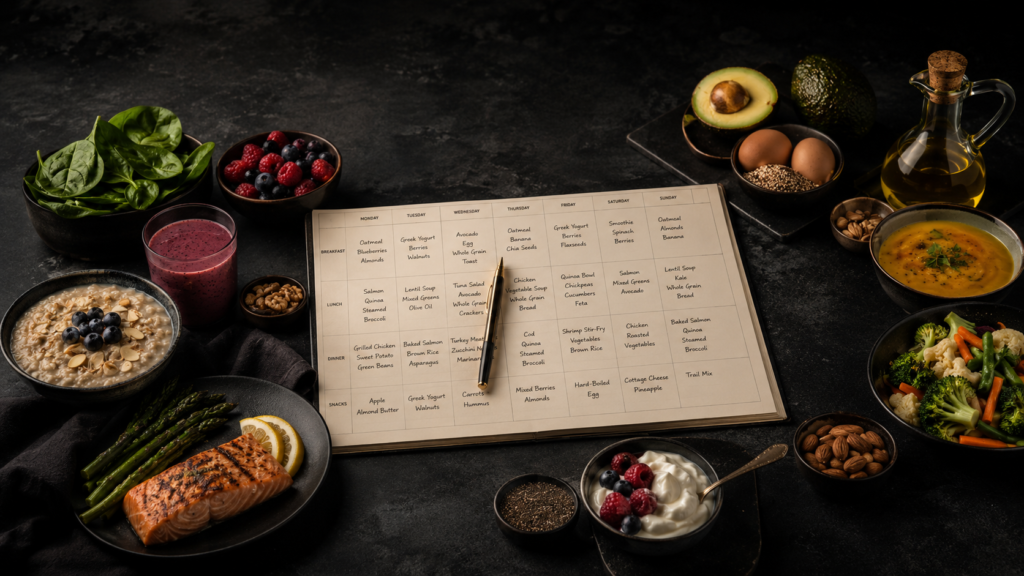
The senior meal plans is the planning center of this hub. It organizes food around timeframes and health goals.
A strong senior meal plan should include balanced breakfasts, simple lunches, easy dinners, hydration reminders, soft food alternatives, and snacks that add nutrients rather than empty calories.
Senior meal plans are especially useful for older adults who want structure without overcomplication. A seven-day plan can help someone restart better eating. A 14-day plan can create variety. A 30-day plan can build a deeper routine. A high-protein plan can support strength. A soft food plan can help when chewing becomes difficult. A diabetic meal plan after 60 can support steadier blood sugar without turning meals into punishment.
For readers who want to understand why these meal patterns matter, the Longevity Science knowledge hub provides the biological background behind aging metabolism, nutrient absorption, inflammaging, sarcopenia, deficiencies, and mitochondrial health.
Healthy Recipes for Seniors: Practical Meals for Daily Aging Nutrition
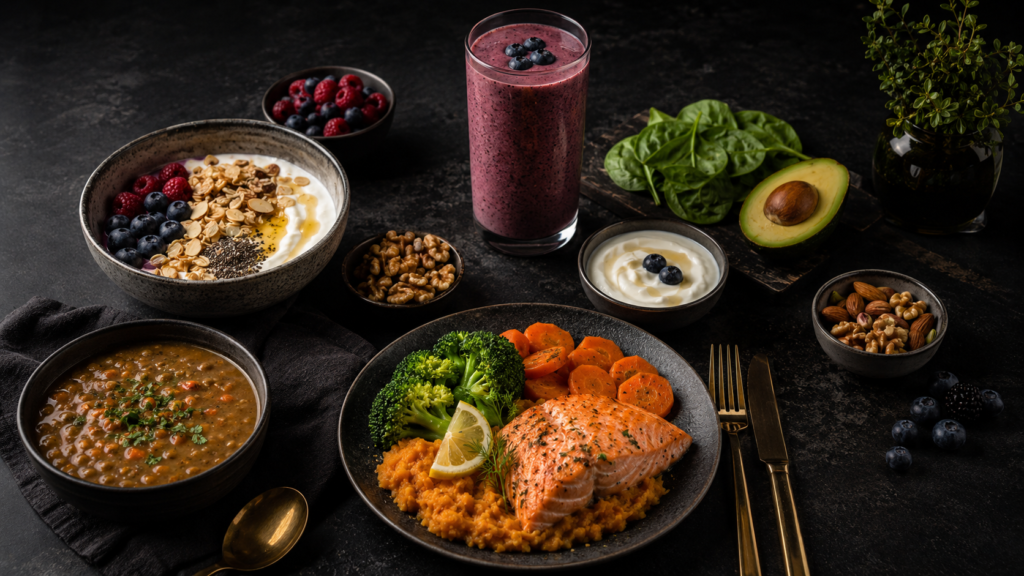
The healthy recipes for seniors pages are written for real kitchens, not ideal kitchens. The best senior recipes are not complicated. They are nutrient-dense, repeatable, easy to chew when needed, and flexible enough for caregivers.
Healthy senior recipes should solve practical problems. Breakfast may need more protein. Lunch may need to be simple enough to repeat. Dinner may need a soft texture. Snacks may need to deliver calories without a large volume of food. Smoothies and protein shakes may help when appetite is low. Low-sodium recipes need flavor, not blandness. Diabetic-friendly recipes need balance, not unnecessary restriction.
Recipes naturally connect with protein powders, blenders, meal prep containers, fortified foods, omega-3 foods, hydration support and kitchen tools. This is where, supplementation becomes relevant, readers can continue into the Healthy Aging & Longevity Supplements section for product-focused guidance.
Therapeutic Nutrition Programs: Food Plans for Frailty, Recovery, Sarcopenia and Chronic Risk
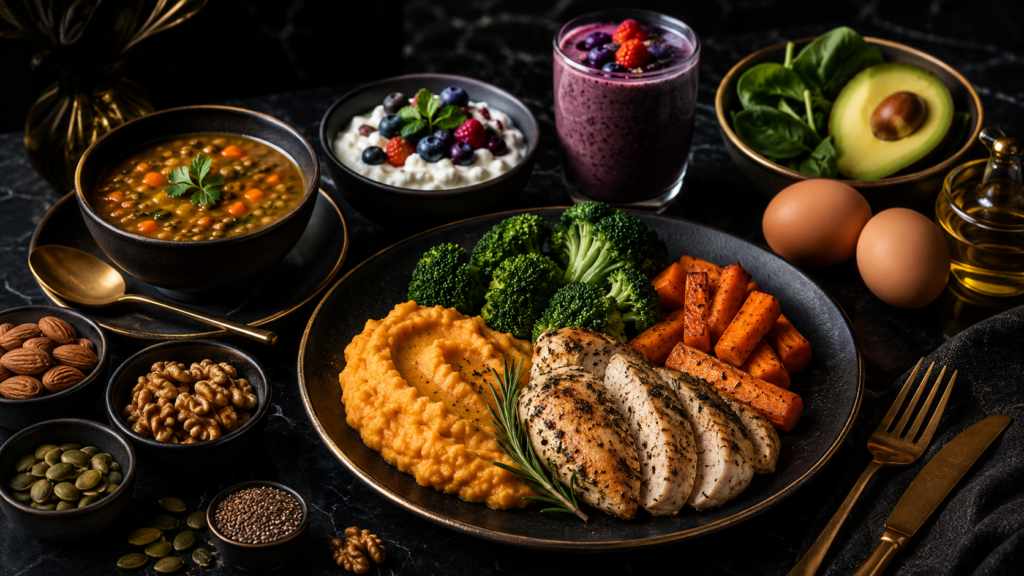
The therapeutic nutrition programs are not casual recipe pages. They are condition-oriented food frameworks for older adults who need targeted support.
A therapeutic nutrition program may focus on sarcopenia, frailty recovery, post-hospital meals, dementia support, osteoporosis, malnutrition recovery, immune support, diabetes, chronic inflammation, post-surgery recovery, or muscle building after 60.
The editorial approach should be careful and practical. These programs should not promise cures. They should show how food can support recovery, strength, energy, appetite, hydration, and nutrient adequacy while encouraging readers with medical conditions to work with qualified health professionals.
For readers who want personalized checklists, calculators, or downloadable resources, our Tools & Clinical Resources can become the next step after therapeutic nutrition content.
Longevity Diet Patterns: Eating Frameworks for Healthy Aging
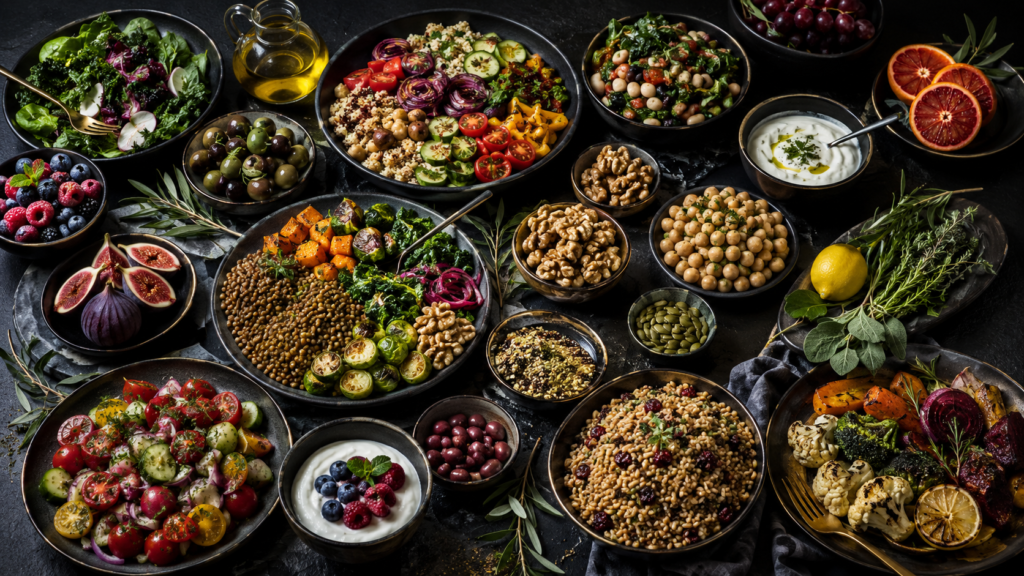
The longevity diet patterns guide gives readers the bigger food philosophies behind the recipes.
This section can cover Mediterranean-style eating, Blue Zone recipes, MIND diet patterns, DASH diet ideas, protein pacing, microbiome-friendly meals, anti-inflammatory frameworks, fasting-mimicking meals, and nutrient-density scoring.
The key is to adapt these ideas for older adults. A longevity diet for a healthy 35-year-old is not always appropriate for an 80-year-old with low appetite, muscle loss, dental problems, or diabetes. Geronutrition should treat longevity eating as a flexible pattern, not a rigid identity.
For readers who want the scientific explanation behind these patterns, our Longevity Science hub, can explain.
Caregiver Meal Support: Making Senior Nutrition Work at Home
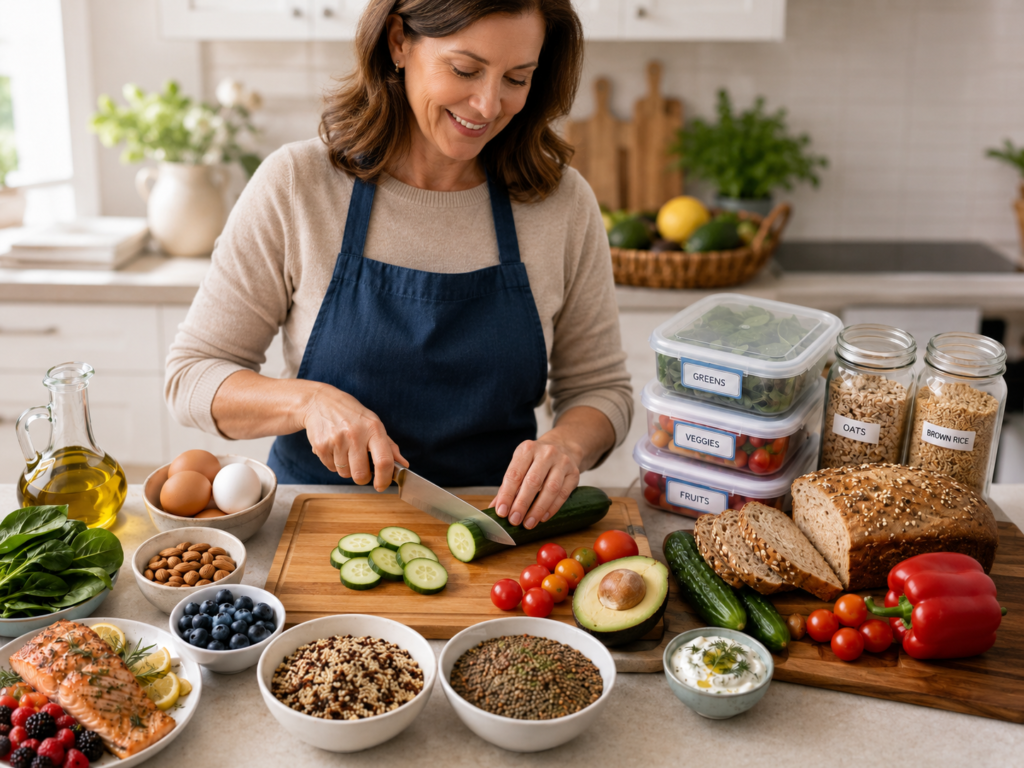
The caregiver meal support is written with empathy. Caregivers often do not need more theory. They need food that gets eaten.
A caregiver may be dealing with a parent who refuses large meals, forgets to drink water, struggles to chew, coughs during meals, dislikes “healthy” food, gets tired halfway through dinner, or cannot shop and cook consistently.
This section should help caregivers create practical food systems: small high-calorie meals, freezer-friendly dinners, hydration recipes, soft foods, dysphagia-aware guidance, one-pan meals, budget-friendly meals, and grocery lists for elderly parents.
The tone should be supportive, not judgmental. The goal is not to make caregivers feel they are failing. The goal is to make senior nutrition more repeatable at home.
Quick Recipes: Easy Meals for Seniors With Limited Time
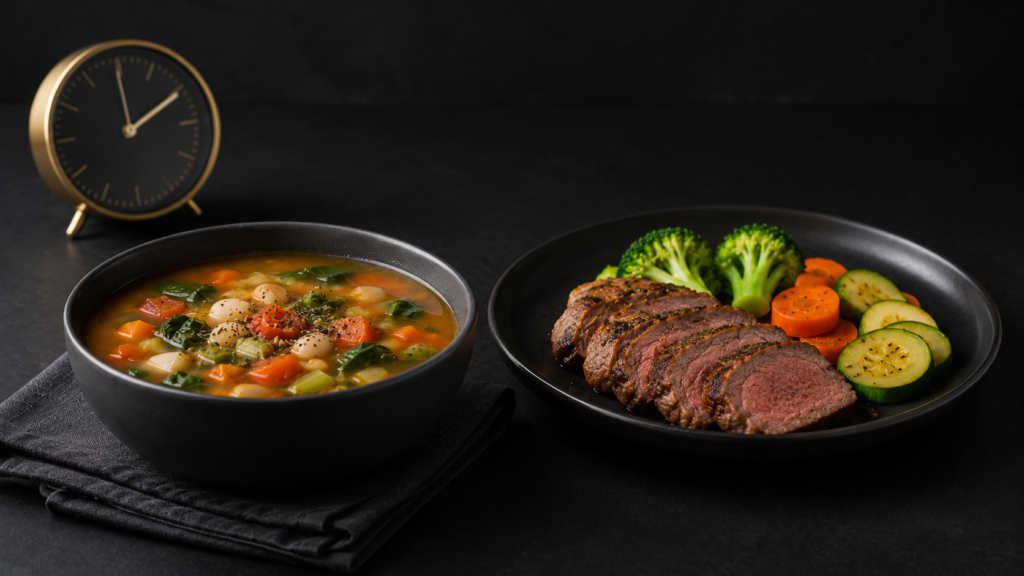
The quick recipes section is built for speed and best for readers who want immediate solutions, not long theory.
Quick senior recipes can include 10-minute breakfasts, 15-minute high-protein meals, no-cook meals, blender recipes, one-bowl meals, easy soups, soft protein meals, healthy desserts, and senior-friendly air fryer recipes.
This section is important because the best nutrition plan is often the one that survives a difficult day. When an older adult is tired, a caregiver is busy, or appetite is low, a fast meal can prevent skipped nutrition.
Downloadable Meal Guides: Printable Planning Tools for Senior Nutrition
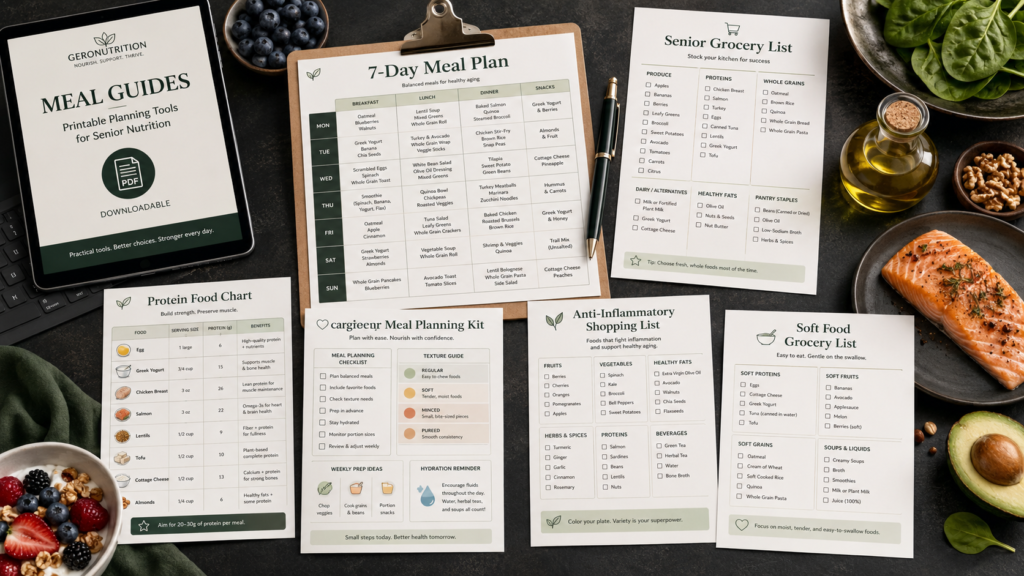
The downloadable meal guides are designed for practical caregiver support.
Printable resources can make senior nutrition easier to follow because they reduce friction. A caregiver can print a grocery list. An older adult can keep a protein food chart on the fridge. A family can use a 7-day senior meal plan PDF as a shared reference. A soft food grocery list can make shopping easier after dental work, illness, or chewing difficulty.
Geronutrition.com develops calculators, downloadable checklists, personalized PDFs and nutrition planning tools. Tools & Clinical Resources 👈
Senior Meal Plans vs Healthy Recipes vs Therapeutic Nutrition Programs
Healthy aging nutrition becomes easier when every food decision has a clear purpose. Some older adults need a structured weekly routine. Others need quick meals, soft foods, higher-protein recipes, caregiver-friendly planning, or therapeutic food support for frailty, sarcopenia, recovery, diabetes, inflammation, and chronic risk.
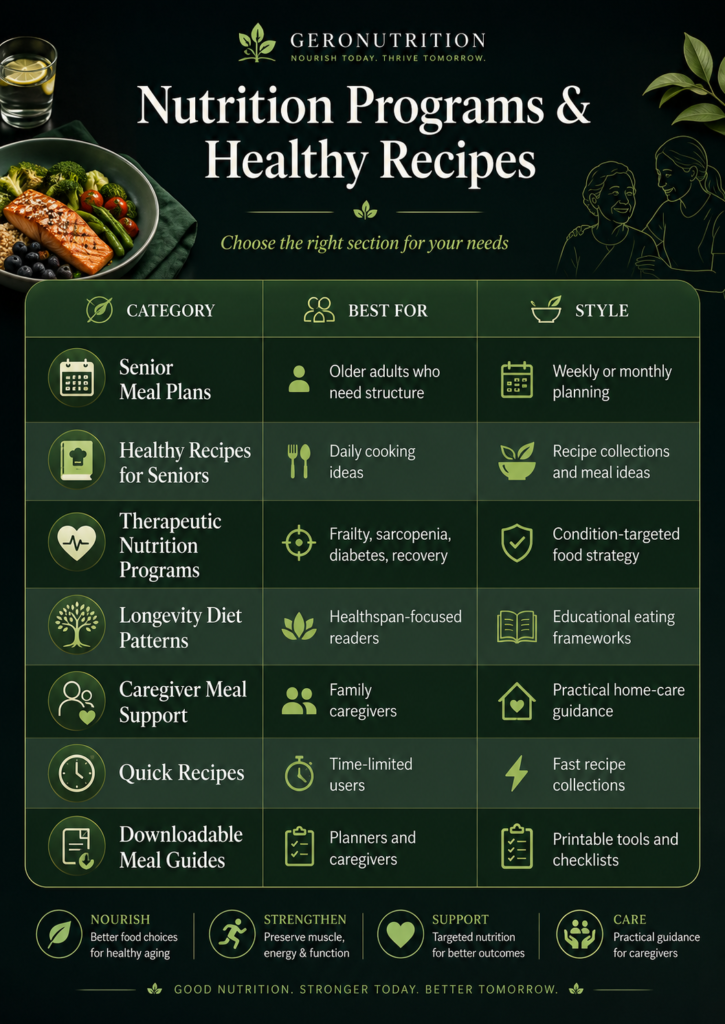
This comparison chart helps you choose the right starting point inside Geronutrition’s Nutrition Programs & Healthy Recipes hub, with each section organized around a specific need: planning, cooking, recovery, longevity, caregiving, speed or printable tools.
If you are building a consistent eating routine, begin with senior meal plans. If you need practical daily cooking ideas, explore healthy recipes for seniors. If the goal is muscle preservation, post-hospital recovery, low appetite support, or condition-focused nutrition, therapeutic nutrition programs may be the better path. Caregivers can use the meal support and downloadable guide sections to make senior nutrition easier to repeat at home.
Use the chart below to quickly compare each category, who it is best for, and the type of nutrition support it provides.
Which Nutrition Program Is Best?
Different readers need different pathways. A healthy 62-year-old trying to improve longevity does not need the same plan as an 82-year-old recovering from hospitalization. A caregiver preparing soft meals for a parent with chewing difficulty does not need the same article as someone looking for high-protein breakfasts.
| Need | Best Starting Point | Why |
|---|---|---|
| General healthy eating after 60 | senior meal plans | Simple, broad, easy to follow |
| Daily cooking inspiration | healthy recipes for seniors | Practical meal ideas for breakfast, lunch, dinner, snacks, and drinks |
| Muscle loss, frailty, or recovery | therapeutic nutrition programs | More targeted food strategies for complex needs |
| Longevity and healthspan | longevity diet patterns | Broader food frameworks for inflammation, metabolism, cognition, and aging |
| Helping an elderly parent | caregiver meal support | Built around real home-care problems |
| Fast meals | quick recipes | Saves time while preserving nutrition quality |
| Printable planning tools | downloadable meal guides | Turns nutrition strategy into checklists, charts, and PDFs |
What Do Senior Nutrition Programs Usually Cost?
Costs vary by country, food prices, dietary needs, supplements, and whether a caregiver cooks at home or buys prepared foods. The table below gives a practical planning view.
| Nutrition Option | Typical Cost Level | Best Use Case | Notes |
|---|---|---|---|
| Home-cooked senior meal plan | Low to moderate | Daily eating routine | Best value when meals are repeated and batch-cooked |
| High-protein meal plan | Moderate | Muscle preservation, frailty prevention | Costs rise with fish, lean meats, Greek yogurt, and protein powders |
| Soft food meal plan | Low to moderate | Chewing difficulty or recovery | Soups, eggs, yogurt, lentils, and oatmeal can be affordable |
| Diabetic senior meal plan | Moderate | Blood sugar stability | Requires consistent groceries and planned snacks |
| Meal replacement drinks | Moderate to high | Low appetite or recovery support | Convenient but should not replace all meals unless advised |
| Caregiver meal prep | Low to moderate | Family-managed care | Freezer meals reduce waste and stress |
| Prepared senior meal delivery | High | Limited cooking ability | Useful but may be expensive long term |
| Blender/protein shake setup | Moderate upfront | Smoothies, soft meals, high-calorie shakes | Can support several recipe formats |
A cost-conscious Geronutrition strategy should start with simple staples: eggs, oats, yogurt, beans, lentils, canned fish, frozen vegetables, olive oil, soft fruits, milk or fortified soy milk, potatoes, rice, herbs, and seasonal produce.
When supplementation becomes necessary, readers can move from food planning into the Healthy Aging & Longevity Supplements section for more product-focused guidance.
Risks and Safety Considerations
Nutrition programs for older adults should be practical, but they should also be safe. Aging bodies can be more sensitive to under-eating, dehydration, medication interactions, swallowing problems, kidney disease, diabetes complications, and rapid weight changes.
Risk 1: Too Much Restriction
Older adults are often told to avoid salt, sugar, fat, carbs, and calories. Sometimes restriction is medically appropriate, but excessive restriction can worsen low appetite, frailty, and unintended weight loss.
A senior meal plan should improve nutrient quality without making eating feel punishing.
Risk 2: Not Enough Protein or Calories
Many older adults unintentionally eat too little. A “clean” diet that is too low in calories may look healthy but fail to support strength, recovery, and daily function.
This is why the senior meal plans and therapeutic nutrition programs sections give enough attention to appetite, calories and realistic meal volume.
Risk 3: Swallowing Difficulty
Coughing during meals, choking, wet-sounding voice, recurrent chest infections, or fear of swallowing should not be treated as a normal part of aging. These signs may require professional evaluation.
The caregiver meal support can provide practical education, but readers with swallowing concerns should seek individualized guidance from qualified professionals.
Risk 4: Diabetes Overcorrection
Some diabetic meal plans become too low in carbohydrates or calories for older adults. The better approach is often consistent carbohydrates, higher fiber, adequate protein, balanced meals, and individualized medical guidance.
Risk 5: Supplement and Medication Conflicts
Food programs often lead readers toward supplements, protein powders, omega-3s, magnesium, calcium, vitamin D, or meal replacement drinks. These can be useful, but they should be matched to medical status, kidney function, medications, and clinician advice.
Readers interested in supplements should continue into the Healthy Aging & Longevity Supplements section and review product-specific guidance carefully.
Upcoming Trends & Latest Tech in Senior Nutrition
Senior nutrition is moving beyond generic meal plans. The next wave is more personal, more measurable, and more connected to healthspan.
Personalized Nutrition Programs
Personalized nutrition is becoming more practical as people use lab markers, wearable data, glucose tracking, health history, medication profiles, and dietary preferences to shape meal plans. For older adults, personalization matters because two people of the same age may have very different needs: one may need muscle gain, another glucose control, another soft foods, another anti-inflammatory meals, and another recovery nutrition.
Geronutrition’s future has Tools & Clinical Resources, including analyzers, calculators, biomarker checklists, and personalized meal planning resources.
Protein and Fiber as Healthy Aging Priorities
Protein and fiber are becoming central to healthy aging conversations. Protein supports muscle and recovery. Fiber supports gut health, satiety, metabolic stability, and diet quality. For older adults, the challenge is not knowing these nutrients matter. The challenge is building meals that include them without requiring complicated cooking.
This is why the protein muscle suand healthy recipes for seniors sections remain a central asset to Geronutrition.
GLP-1 Era Meal Planning for Older Adults
As more adults use GLP-1 medications for weight management or diabetes, nutrition planning must adapt. Lower appetite can make it harder to consume enough protein, fiber, fluids, and micronutrients. For older adults, this can raise concern around lean mass, weakness, constipation, and inadequate intake.
Geronutrition can address this trend with careful, non-prescriptive content around protein-forward small meals, hydration, resistance-training nutrition, and clinician-supervised planning.
Smart Kitchen Tools for Aging-in-Place
Senior-friendly kitchens are becoming part of healthy aging. Useful tools include lightweight blenders, easy-grip utensils, air fryers with simple controls, automatic shutoff appliances, portion containers, digital food scales, grocery delivery apps, and medication-aware meal planning systems.
This trend fits naturally into quick recipes and caregiver meal support, especially when recipes need to be fast, safe, repeatable, and easy to prepare.
Downloadable and Dynamic Meal Plans
Static recipes are useful, but dynamic tools are more engaging. The next stage for Geronutrition should include printable and interactive assets such as grocery lists, senior meal plan PDFs, protein food charts, soft food grocery lists, diabetic meal planners, and caregiver planning kits.
Charts & Tables: Senior Nutrition Planning Framework
Meal Planning Priority Matrix
| Priority | Why It Matters After 60 | Best Food Strategy |
|---|---|---|
| Protein | Supports muscle, recovery, and strength | Include protein at breakfast, lunch, dinner, and snacks |
| Fiber | Supports gut and metabolic health | Use oats, beans, lentils, vegetables, berries, and whole grains |
| Hydration | Supports cognition, digestion, energy, and medication tolerance | Add soups, smoothies, fluids, fruits, and hydration reminders |
| Texture | Chewing and swallowing issues can reduce intake | Use soft proteins, soups, stews, smoothies, and purees when needed |
| Calories | Low appetite can cause unintended weight loss | Use small, nutrient-dense meals with healthy fats and protein |
| Micronutrients | Older adults may be vulnerable to shortfalls | Include dairy or fortified alternatives, vegetables, fish, legumes, eggs |
| Convenience | Complex plans fail quickly | Use repeatable meals, batch cooking, freezer meals, and printable lists |
Example Daily Plate Structure for Healthy Aging
| Meal | Goal | Example |
|---|---|---|
| Breakfast | Protein + fiber | Greek yogurt, berries, oats, chia, or eggs with soft vegetables |
| Lunch | Protein + color + healthy fat | Lentil soup with olive oil, soft vegetables, and fruit |
| Snack | Nutrient density | Protein smoothie, cottage cheese, nut butter toast, or fortified yogurt |
| Dinner | Protein + vegetables + energy | Soft fish, sweet potato, cooked greens, and olive oil |
| Evening option | Extra calories if needed | Warm milk, yogurt bowl, or small protein shake |
Food Is the Daily System Behind Healthy Aging
Healthy aging does not happen only in clinics, supplement cabinets, or lab reports. Much of it happens quietly at breakfast, lunch, dinner, and the small snack that prevents a weak day from becoming a worse week.
The Nutrition Programs & Healthy Recipes pillar gives Geronutrition.com a practical center of gravity. It connects senior meal plans, healthy recipes, therapeutic food programs, caregiver support, quick recipes, longevity diet patterns, and downloadable guides into one usable system.
For older adults, the goal is not a perfect diet. The goal is a repeatable pattern that supports strength, appetite, digestion, cognition, blood sugar, bone health, recovery, and independence.
Start with senior meal plans if you want structure. Visit healthy recipes for seniors if you need practical meals. Use therapeutic nutrition programs if the goal is recovery or condition support. Explore longevity diet patterns if your focus is long-term healthspan. And use downloadable meal guides when you want printable tools that make healthy aging easier to manage.
FAQs
What are the best nutrition programs and healthy recipes for seniors over 60?
The best nutrition programs and healthy recipes for seniors over 60 are the ones that support protein intake, hydration, fiber, bone health, brain health, stable energy, and easy meal preparation. A strong starting point is a weekly senior meal plan with high-protein breakfasts, simple lunches, soft dinner options, and nutrient-dense snacks. Seniors with diabetes, low appetite, chewing difficulty, frailty, or recovery needs may benefit from more targeted food planning through senior meal plans or therapeutic nutrition programs.
How do senior meal plans help older adults eat better?
Senior meal plans reduce daily decision fatigue and make nutrition more consistent. Instead of choosing meals randomly, older adults and caregivers can follow a weekly structure that includes protein, vegetables, fluids, snacks, and easy-to-prepare recipes. This is especially helpful for people with low appetite, muscle loss, diabetes, recovery needs, or difficulty shopping and cooking every day.
What should be included in a high protein meal plan for elderly adults?
A high protein meal plan for elderly adults should include protein at breakfast, lunch, dinner, and snacks. Good options include eggs, Greek yogurt, cottage cheese, fish, poultry, beans, lentils, tofu, fortified dairy alternatives, soft meats, and protein shakes when needed. The plan should also include enough calories, fiber, fluids, and soft food options for seniors who have chewing difficulty or reduced appetite.
What are easy meals for seniors with chewing problems?
Easy meals for seniors with chewing problems include soft scrambled eggs, yogurt bowls, lentil soup, blended vegetable soup, soft fish, mashed sweet potatoes, cottage cheese, oatmeal, smoothies, tender meatballs, stewed fruit, and soft casseroles. The goal is to keep meals soft without removing nutrition. If swallowing problems are present, a clinician or speech-language professional should assess safety before relying on texture-modified foods.
Are healthy recipes for seniors different from normal healthy recipes?
Yes. Healthy recipes for seniors often need to consider appetite, chewing ability, swallowing safety, medication schedules, hydration, protein needs, digestion, blood sugar, and ease of preparation. A normal healthy recipe may be too low in protein, too hard to chew, too large in portion size, or too time-consuming. Senior-friendly recipes should be practical, nutrient-dense, flavorful, and easy to repeat.
People Also Ask
What is the easiest meal plan for seniors?
The easiest meal plan for seniors uses repeatable meals rather than complicated daily menus. A practical plan might rotate Greek yogurt breakfasts, egg-based breakfasts, soups, soft grain bowls, fish dinners, chicken vegetable meals, smoothies, and nutrient-dense snacks. The goal is not constant variety. The goal is reliable nutrition that can be shopped for, cooked, reheated, and eaten without stress.
What are the best healthy recipes for seniors with low appetite?
The best healthy recipes for seniors with low appetite are small, nutrient-dense meals. Examples include protein smoothies, Greek yogurt with nut butter, egg custard, creamy lentil soup, avocado tuna mash, fortified oatmeal, soft cheese with fruit, and high-calorie mini meals. Large plates can discourage eating, so smaller portions with more protein, healthy fat, and calories often work better.
What is a good diabetic meal plan after 60?
A good diabetic meal plan after 60 balances carbohydrates with protein, fiber, healthy fats, and consistent meal timing. It should avoid extreme restriction unless medically required. Older adults with diabetes still need enough calories and nutrients to preserve strength and prevent weakness. Meals may include eggs, vegetables, beans, lentils, fish, Greek yogurt, oats, berries, soft whole grains, and planned snacks.
What foods help seniors maintain muscle after 60?
Foods that help seniors maintain muscle after 60 include eggs, fish, poultry, Greek yogurt, cottage cheese, lentils, beans, tofu, milk or fortified soy milk, lean meat, protein shakes, and soft high-protein meals. Protein works best when it is distributed throughout the day and paired with appropriate physical activity when possible. Seniors with kidney disease or complex medical conditions should follow clinician guidance.
What should caregivers cook for elderly parents?
Caregivers should cook meals that match the older adult’s appetite, chewing ability, medical needs, and preferences. Useful options include soups, stews, soft casseroles, protein smoothies, egg dishes, lentil meals, fish, cooked vegetables, freezer-friendly meals, and small high-calorie snacks. The best caregiver meal plan is one that the older adult will actually eat and the caregiver can realistically repeat.