
Amazon Affiliate Disclosure
Geronutrition.com may earn a commission from qualifying purchases made through affiliate links, including Amazon affiliate links. This does not increase the price you pay. Product references may include protein powders, whey protein, plant protein, collagen, essential amino acids, leucine, creatine, HMB, omega-3, vitamin D, resistance bands, grip strength tools, meal replacement products, and senior nutrition products.
Supplements are not a substitute for medical diagnosis, prescribed medication, adequate food intake, resistance training, physical therapy, or professional care. Adults over 50 should speak with a qualified healthcare professional before starting protein or muscle-support supplements, especially if they have kidney disease, liver disease, heart disease, diabetes, cancer history, frailty, swallowing difficulty, unexplained weight loss, severe weakness, reduced kidney function, or are taking prescription medication.
Protein muscle support becomes one of the most important healthy aging strategies after 50 because muscle is not just tissue under the skin. It is metabolic reserve, strength reserve, balance support, glucose storage, recovery capacity, and independence insurance. When older adults lose muscle, the effect does not stay inside the gym. It shows up in stairs, walking speed, grip strength, posture, fall risk, recovery from illness, and the ability to live without constant assistance.
For the full healthy aging framework, the Geronutrition homepage explains how nutrition, supplements, metabolism, muscle, and longevity science connect after midlife.
The core idea is simple but often missed: older muscle needs both material and signal. Protein provides amino acids, especially essential amino acids and leucine. Resistance training provides the signal telling the body to keep and rebuild muscle. Supplements can help, but only when they fit into that two-part system.
NIH explains that muscle mass naturally begins declining around age 30, with an estimated 3–5% loss every decade, and that sarcopenia can make it harder to stand from a chair, walk, open jars, carry groceries, and avoid falls. NIH also emphasizes resistance training and adequate protein as major strategies for protecting muscle with age. (NIH News in Health)
Jump Quickly to the Section You Need
Find the Protein Muscle Support Answer You Need
Use this interactive guide to jump straight to the most relevant section, whether you are comparing whey and collagen, checking creatine after 50, reviewing sarcopenia supplements, or looking for safety details.
“What is protein muscle support?”
What Protein Muscle Support Means
“Which protein is best for seniors?”
Best Protein Powder for Seniors
“Is whey better than collagen?”
Whey vs Collagen for Elderly Adults
“Do amino acids help aging muscles?”
Essential Amino Acids and Leucine
“Is creatine useful after 50?”
Creatine for Older Adults
“What supplements help sarcopenia?”
Sarcopenia Supplements
“What should I eat daily?”
Protein Muscle Support Meal Framework
“How much does it cost?”
Costs of Protein Muscle Support
“What are the risks?”
Risks, Interactions, and Safety
“What’s new in 2026?”
Trends and Latest Tech
“What comes next?”
Upcoming Models
“I need fast answers.”
FAQs and People Also Ask
What This Guide Is For
This guide explains protein muscle support from a supplement, nutrition, and healthy aging perspective. It is designed for adults over 50, adults over 60, caregivers, affiliate content publishers, senior wellness readers, and anyone comparing muscle preservation products.
It covers:
- best protein powder for seniors
- protein supplements for older adults
- muscle preservation after 60
- whey vs collagen for elderly adults
- essential amino acids for seniors
- leucine supplements for aging muscles
- creatine for older adults
- sarcopenia supplements
- protein resistance aging
- best supplements for frailty
- meal timing and protein distribution
- supplement comparison charts
- costs, risks, safety, and product selection
The goal is not to turn every older adult into a bodybuilder. The goal is to protect function: standing, walking, lifting, recovering, balancing, and staying independent.
Who Needs Protein Muscle Support?
Adults Over 50
This is the stage when muscle maintenance becomes more deliberate. A person may still feel active, but the body begins requiring stronger nutrition and movement signals to preserve strength.
Adults Over 60
After 60, the cost of ignoring muscle rises. Appetite may decline, protein intake may fall, chronic disease may increase, and recovery may slow. Protein muscle support should be part of any serious nutrition plans for seniors strategy.
Seniors With Weakness, Slow Walking, or Falls
Weak grip, slow gait, difficulty rising from a chair, or fear of falling can signal a need for medical review, protein assessment, strength training, and possible supplement support.
Adults Losing Weight After 50
Weight loss without protein and resistance training can reduce muscle along with fat. This is especially important for older adults using appetite-suppressing medications or aggressive calorie restriction.
Caregivers Supporting Older Parents
Caregivers often notice muscle loss through behavior: the parent stops using stairs, sits longer, avoids grocery bags, eats smaller meals, or becomes less confident walking outside.
People Comparing Supplements
This guide helps readers decide whether they need whey, plant protein, collagen, essential amino acids, leucine, creatine, HMB, or a sarcopenia-focused supplement stack.
Protein muscle support belongs inside Healthy Aging & Longevity Supplements because muscle preservation is one of the highest-value supplement goals after 50.
What Protein Muscle Support Means
Protein muscle support is the combined strategy of using food, protein timing, strength training, and targeted supplements to preserve or improve muscle mass, muscle strength, and physical performance with age.
It includes three layers:
- Protein supply: enough amino acids from food or supplements.
- Muscle signal: resistance training or progressive strength movement.
- Recovery environment: sleep, calories, vitamin D, inflammation control, glucose stability, hydration, and medical care when needed.
Older adults may need more protein than younger adults because aging changes protein metabolism and muscle responsiveness. The PROT-AGE Study Group recommends that adults over 65 generally consume at least 1.0–1.2 g of protein per kilogram of body weight per day to maintain or regain lean mass and function, with higher intakes often advised for active older adults or those with acute or chronic disease. The exception is older adults with severe kidney disease who may need protein restriction under medical supervision. (PubMed)
Benefits of Protein Muscle Support After 50
Better Strength
Protein plus resistance training supports muscle protein synthesis, strength adaptation, and recovery. Strength is not only about lifting weights. It is the ability to stand, carry, climb, reach, and stabilize.
Better Mobility
Muscle supports walking speed, balance, stair climbing, and confidence outdoors. NIH notes that weaker grip strength and slower walking speed are linked with higher risks of falls, mobility limitations, hip fractures, and death in older adults. (NIH News in Health)
Better Recovery
Illness, surgery, injury, and hospitalization increase the body’s need for repair. Low protein intake can leave older adults with less reserve.
Better Metabolic Health
Skeletal muscle helps store and use glucose. Because muscle strongly influences blood sugar and energy use, this naturally connects with metabolic support.
Better Frailty Resistance
Frailty is not caused by low muscle alone, but muscle loss is one of the major contributors. Protein, resistance training, vitamin D status, calories, and medical review matter.
Better Supplement Efficiency
Protein powders and creatine are more useful when paired with training. Supplements used without a muscle-building signal often underperform.
The Protein Muscle Support Framework
1. Build Protein Into Every Meal
Older adults often eat too little protein at breakfast and lunch, then rely on dinner. That pattern is weaker for muscle preservation than spreading protein across the day.
| Meal | Better Protein Pattern |
|---|---|
| Breakfast | Eggs, Greek yogurt, cottage cheese, protein smoothie |
| Lunch | Fish, chicken, tofu, lentils, beans, turkey |
| Dinner | Salmon, lean meat, tempeh, eggs, poultry |
| Snack | Protein shake, kefir, yogurt, boiled egg |
2. Pair Protein With Resistance Training
Protein is material. Resistance training is the signal. Without the signal, the body has fewer reasons to use that protein for muscle repair and growth.
3. Prioritize Leucine-Rich Protein
Leucine is an essential amino acid that helps trigger muscle protein synthesis. Whey, dairy, eggs, fish, poultry, meat, and soy are generally stronger leucine sources than collagen.
4. Protect Calories
Older adults trying to eat “clean” may accidentally under-eat. Muscle preservation requires enough total energy, not protein alone.
5. Correct Supporting Nutrient Gaps
Vitamin D, magnesium, omega-3, B12, iron status, and inflammation all influence muscle function or recovery. For micronutrient patterns, continue to nutrient deficiencies in older adults.
Best Protein Powder for Seniors
The best protein powder for seniors is usually the one that is easy to digest, high in complete protein, low in added sugar, clearly dosed, and realistic to use daily.
What to Look For
| Feature | Why It Matters |
|---|---|
| 20–30g protein per serving | Useful amount for meal gaps |
| Complete amino acid profile | Supports muscle protein synthesis |
| Leucine-rich protein | Important trigger for aging muscle |
| Low added sugar | Better for metabolic health |
| Good taste and texture | Adherence matters |
| Third-party testing | Quality and contaminant assurance |
| Clear ingredient list | Easier for allergies and medication review |
| Digestive tolerance | Seniors may be sensitive to lactose, gums, or sweeteners |
Best Use Cases
Protein powder is most useful when:
- breakfast is low in protein
- appetite is low
- chewing is difficult
- meal preparation is inconsistent
- weight loss threatens muscle
- resistance training has started
- illness recovery requires nutrition support
Protein Powder Options
| Type | Best Fit | Watchouts |
|---|---|---|
| Whey isolate | High protein, lower lactose, fast-digesting | Dairy allergy not suitable |
| Whey concentrate | Affordable, good taste | More lactose |
| Casein | Slow-digesting, evening use | Dairy-based |
| Soy protein | Complete plant protein | Soy allergy or preference |
| Pea protein | Common plant option | Lower methionine; often better in blends |
| Plant blend | Vegan-friendly, improved amino acid balance | Texture and taste vary |
| Collagen | Connective tissue support | Not a complete muscle protein |
A 2025 systematic review and meta-analysis on whey protein in older adults notes that whey protein can play a role in improving muscle mass and function, particularly in research settings where it is combined with resistance training. (MDPI)
Whey vs Collagen for Elderly Adults
Whey and collagen are often placed side by side in product marketing, but they do different jobs.
Whey Protein
Whey is a complete protein derived from milk. It is rich in essential amino acids and leucine, making it one of the strongest supplement choices for muscle protein synthesis.
Best for:
muscle preservation, breakfast protein gaps, post-exercise support, sarcopenia risk, frailty prevention plans.
Collagen
Collagen is rich in glycine, proline, and hydroxyproline, but it is not a complete protein for muscle building because it is low in essential amino acids and leucine.
Best for:
joint, tendon, skin, and connective tissue support positioning.
Comparison Chart: Collagen Protein vs Whey Protein for Elderly Adults
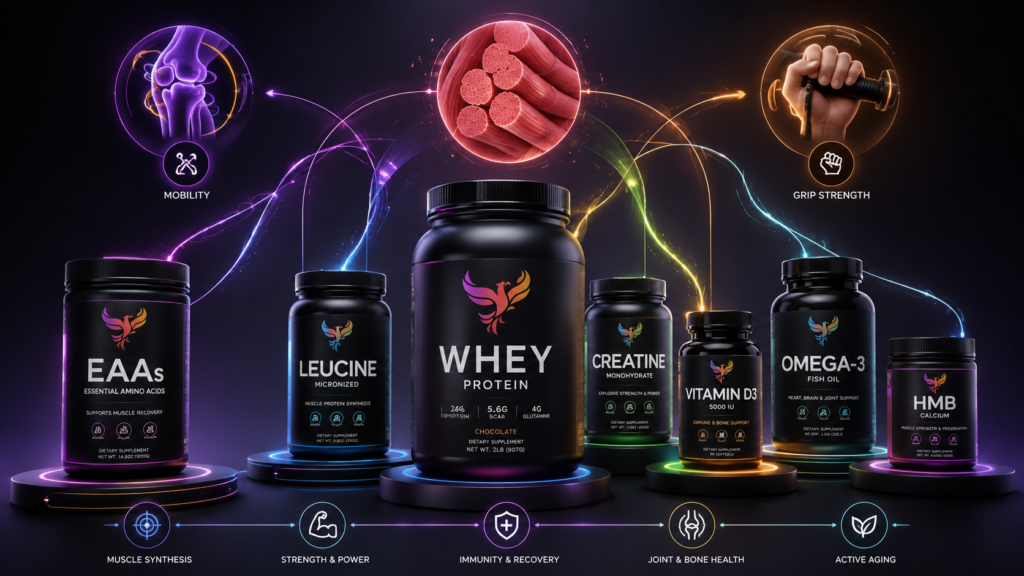
| Feature | Whey Protein | Collagen |
|---|---|---|
| Complete protein | Yes | No |
| Leucine content | High | Low |
| Muscle protein synthesis | Stronger fit | Weak as primary muscle protein |
| Best use | Muscle preservation | Connective tissue support |
| Post-workout use | Strong option | Add-on, not primary |
| Senior breakfast support | Strong option | Not enough alone |
| Dairy-free | No | Usually yes, but animal-derived |
| Best pairing | Resistance training | Vitamin C and joint/tendon routines |
Editorial recommendation: For muscle support after 50, whey or a complete plant protein is usually the better primary protein supplement. Collagen can be useful, but it should not be counted as the main protein source for sarcopenia prevention.
For the dedicated cluster, link naturally to whey vs collagen for elderly.
Essential Amino Acids for Seniors
Essential amino acids, or EAAs, are amino acids the body cannot produce on its own. They must come from food or supplements. EAA supplements can be useful for older adults who have low appetite, small meal capacity, or difficulty tolerating full protein shakes.
When EAAs Make Sense
- low appetite
- small stomach capacity
- post-illness recovery
- difficulty drinking protein shakes
- low protein breakfast
- training support in older adults
- medically supervised frailty nutrition
EAA vs Protein Powder
| Feature | Essential Amino Acids | Protein Powder |
|---|---|---|
| Calories | Usually low | Moderate |
| Amino acid completeness | Essential amino acids only | Whole protein |
| Best for | Small appetite, targeted amino support | Meal protein gaps |
| Satiety | Lower | Higher |
| Muscle support | Useful if properly dosed | Stronger food-like support |
| Cost | Often higher per gram | Usually better value |
EAAs can be helpful, but they are usually not as satisfying or cost-effective as a complete protein powder for daily nutrition.
Leucine Supplements for Aging Muscles
Leucine is a key amino acid involved in triggering muscle protein synthesis. It is often discussed in aging because older muscle may require a stronger amino acid signal.
Food Sources of Leucine
- whey protein
- milk
- Greek yogurt
- eggs
- fish
- chicken
- beef
- soy
- lentils and beans, though usually less concentrated per serving
Leucine Supplement Use
Leucine supplements may help when meals are low in leucine or when an older adult uses plant-based protein that needs amino acid strengthening.
Leucine vs Complete Protein
| Feature | Leucine | Complete Protein |
|---|---|---|
| Role | Trigger signal | Building material plus trigger |
| Best use | Boosting weak meals | Foundation |
| Muscle value alone | Limited without other amino acids | Stronger |
| Cost-effectiveness | Situational | Usually better |
| Senior fit | Add-on | Primary strategy |
Editorial recommendation: Leucine is important, but older adults usually need complete protein first. Leucine is the spark; complete protein is the wood.
Creatine for Older Adults
Creatine is one of the most practical muscle-support supplements for older adults who are doing resistance training. It helps regenerate ATP, the rapid energy currency used during short bursts of muscle effort.
The International Society of Sports Nutrition position stand reports that creatine supplementation can improve exercise performance and training adaptations, and that short- and long-term use has been reported as safe and well-tolerated in healthy individuals and several patient populations, including older adults. (SpringerLink)
Best For
- resistance training support
- low meat intake
- strength goals
- muscle power
- chair rise and functional strength goals
- older adults building a muscle-preservation routine
What to Look For
- creatine monohydrate
- plain powder
- third-party testing
- no stimulant blend
- clear 3–5g serving
- easy mixing
Watchouts
People with kidney disease, reduced kidney function, or complex medical histories should speak with a clinician before using creatine. Creatine can also affect creatinine lab interpretation, so clinicians should know it is being used.
For a dedicated cluster, use creatine for older adults.
Sarcopenia Supplements
Sarcopenia supplements are not a single category. They are a support system around muscle loss.
Higher-Value Sarcopenia Supplement Options
| Supplement | Main Role | Best Fit |
|---|---|---|
| Protein powder | Closes protein gaps | Low appetite, low protein breakfast |
| Whey protein | Leucine-rich complete protein | Muscle protein synthesis support |
| Essential amino acids | Targeted amino support | Small appetite, low intake |
| Leucine | Meal signal support | Low-leucine meals |
| Creatine | Strength and rapid energy | Resistance training |
| Vitamin D | Muscle and bone support if low | Low vitamin D |
| Omega-3 | Inflammatory balance | Low fish intake |
| HMB | Muscle breakdown support | Frailty, immobilization, low intake scenarios |
| Magnesium | Muscle and energy metabolism | Low intake or cramps |
NIH notes that some supplements, including amino acids, fish oil, vitamin D, selenium, magnesium, and omega-3 fatty acids, have shown promise for preventing muscle loss when combined with diet and exercise, while emphasizing that more research is needed. (NIH News in Health)
The Key Rule
Sarcopenia supplements work best when paired with resistance training and adequate total calories. A powder cannot replace muscle stimulation.
For the cluster page, link to sarcopenia supplements.
Protein and Resistance Training in Aging
Protein and resistance training are partners. Protein without training is like delivering bricks to a construction site with no workers. Training without protein is like hiring workers with no materials.
Beginner Resistance Options
- chair stands
- wall pushups
- resistance band rows
- light dumbbell presses
- step-ups
- sit-to-stand repetitions
- farmer carries
- grip trainers
- supervised machine exercises
- water resistance exercises
Weekly Pattern
| Day | Muscle Support Habit |
|---|---|
| Monday | Strength training + protein-rich meals |
| Tuesday | Walking + protein distribution |
| Wednesday | Strength training + recovery meal |
| Thursday | Mobility + balanced meals |
| Friday | Strength training + protein smoothie if needed |
| Saturday | Walking, stairs, light carries |
| Sunday | Recovery, meal prep, hydration |
A recent 2026 summary of a large meta-analysis reported that older adults pairing whey protein with resistance training showed strong improvements in muscle mass and leg strength, with multicomponent exercise improving mobility-related outcomes such as walking speed and balance. (Health)
Muscle Preservation After 60
Muscle preservation after 60 requires a more serious nutrition strategy than “eat healthy.”
The 5-Part Muscle Preservation Plan
1. Protein at Breakfast
A toast-only or tea-only breakfast is a missed muscle opportunity.
2. Protein at Lunch
Many older adults under-eat lunch. A soup without protein is not enough.
3. Strength Training Twice Weekly Minimum
Strength must be trained, not assumed.
4. Vitamin D and B12 Awareness
Low vitamin D and B12 can overlap with weakness, fatigue, and poor function.
5. Track Function, Not Only Weight
Grip strength, chair rise, gait speed, stair ability, and balance matter more than scale weight alone.
For broader context, use muscle preservation after 60
Best Supplements for Frailty
Frailty is broader than sarcopenia. It may include weakness, exhaustion, unintentional weight loss, slow walking, low activity, poor appetite, and reduced resilience.
Supplement Priorities for Frailty Risk
| Concern | Support Strategy |
|---|---|
| Low appetite | Protein powder, oral nutrition support, small meals |
| Weakness | Protein, creatine if appropriate, strength training |
| Low vitamin D | Test and correct |
| Low calories | Meal replacement only when appropriate |
| Poor healing | Protein, zinc, vitamin C, medical review |
| Inflammation | Omega-3, Mediterranean-style diet |
| Constipation | Fiber, fluids, movement |
| Low B12 | Test and correct |
Frailty requires medical context. Supplements may help, but unexplained weight loss, severe weakness, or repeated falls should be evaluated.
Protein Muscle Support Meal Framework
Daily Plate Structure
Build a Better Daily Plate After 60
Hover or tap each part of the plate to see the best choices for protein, fiber carbohydrates, healthy fats, micronutrients, hydration, and the strength signal that supports muscle preservation.
Complete Protein
Complete protein supplies essential amino acids for muscle repair, recovery, and strength maintenance. For older adults, this is the anchor of the plate.
Senior-Friendly Meal Ideas
Click a Meal to Reveal the Recipe Ingredients
Each meal is built for muscle support after 60, combining protein, fiber, micronutrients, hydration, healthy fats, or soft textures depending on the goal.
Greek Yogurt, Berries, Chia, Walnuts
Protein, calcium, fiber, and healthy fats for a high-protein breakfast or soft snack.
Recipe Ingredients- Greek yogurt
- Mixed berries
- Chia seeds
- Walnuts
- Cinnamon
- Optional honey
Protein Muscle Support Options
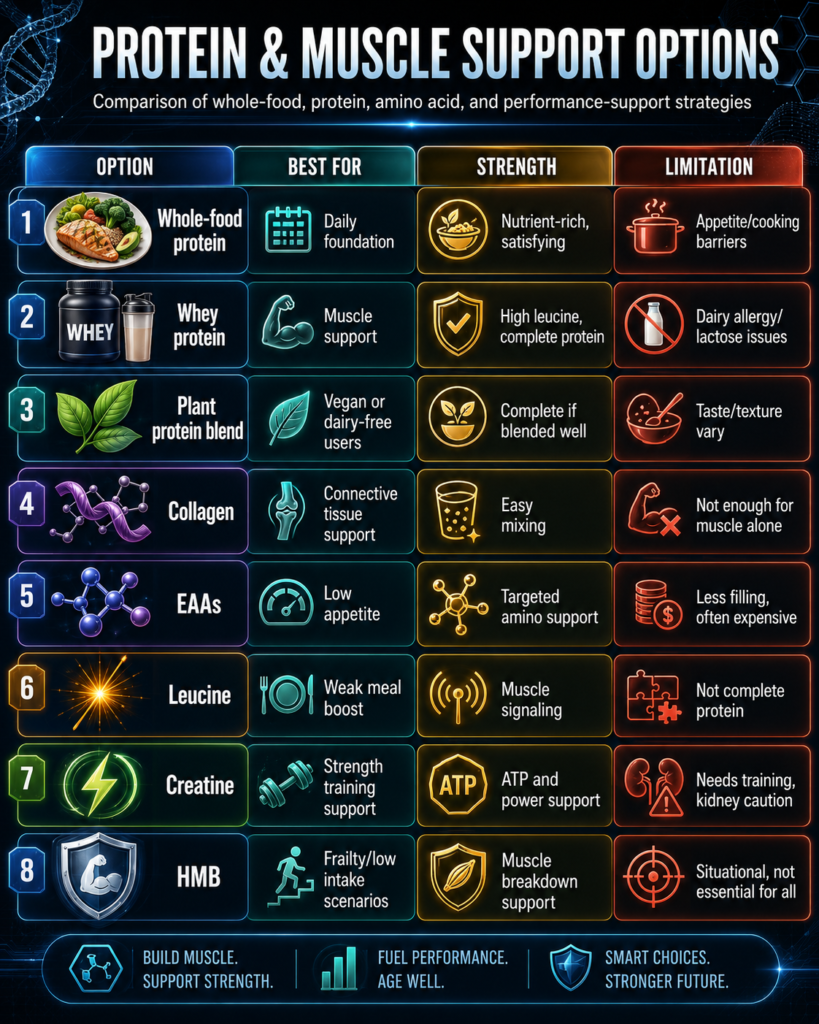
Protein Muscle Support Product Selection Checklist
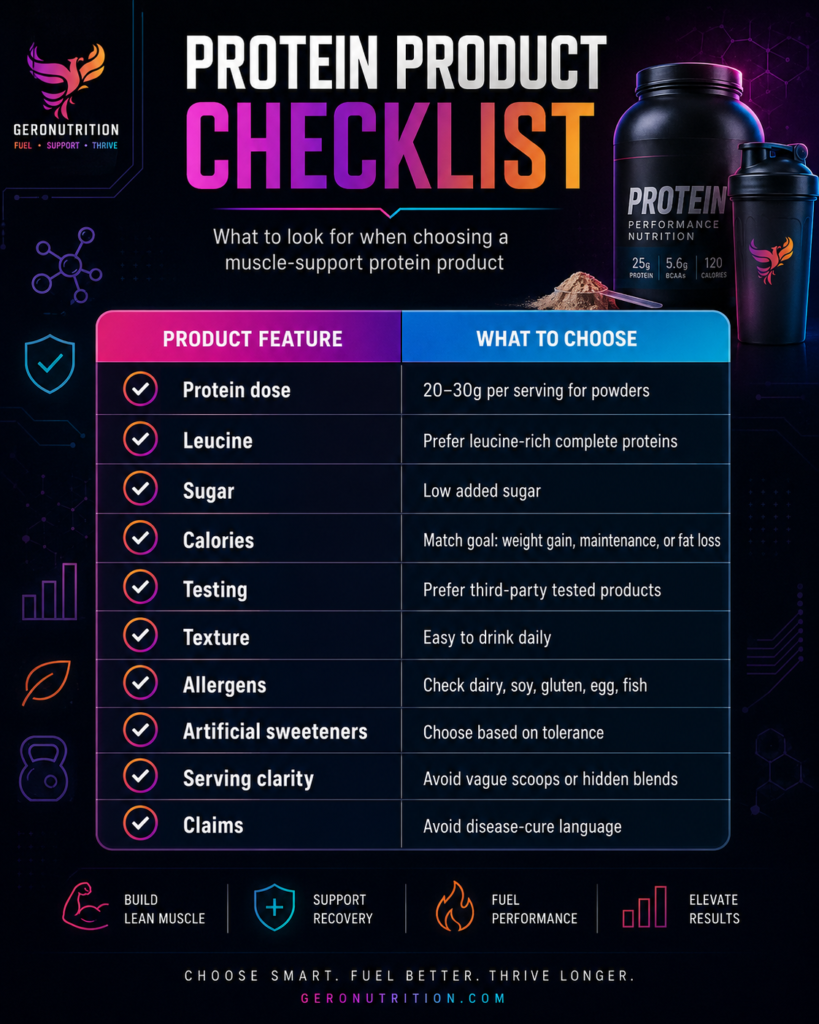
The FDA states that dietary supplement labels must include required information such as a Supplement Facts panel, ingredient declarations, serving size, dietary ingredient amounts, net quantity, and manufacturer contact information for serious adverse event reporting. (U.S. Food and Drug Administration)
For readers who prefer printable, step-by-step nutrition guidance, Geronutrition has many Free Useful and Advanced Checklists to help compare protein powders, supplements, meal plans, 42+ complete bloodtest markers, and healthy aging routines with more confidence.
Costs of Protein Muscle Support
Monthly Cost Overview
| Strategy/Product | Estimated Cost Level | Best Use |
|---|---|---|
| Eggs, yogurt, lentils, beans | Low to moderate | Food-first protein |
| Fish, poultry, lean meat | Moderate | Complete protein |
| Whey protein | Moderate | Protein gaps |
| Plant protein blend | Moderate | Dairy-free protein |
| Collagen | Moderate | Connective tissue add-on |
| EAAs | Moderate to high | Small appetite amino support |
| Leucine | Low to moderate | Meal boosting |
| Creatine monohydrate | Low to moderate | Strength training support |
| HMB | Moderate | Frailty/immobilization scenarios |
| Resistance bands | Low one-time cost | Home training |
| Dumbbells | Low to moderate one-time cost | Progressive strength |
| Physical therapy | Moderate to high | Frailty, pain, fall risk |
| Dietitian consult | Moderate to high | Complex nutrition |
Best Value Priorities
The best value usually comes from:
- protein-rich breakfast
- resistance bands or basic weights
- whey or complete plant protein if food intake is low
- creatine monohydrate if training and medically appropriate
- vitamin D testing when risk is high
- omega-3 intake through fish or supplement
- meal prep for protein consistency
- physical therapy if strength training feels unsafe
Where Money Is Often Wasted
Avoid overspending on:
- collagen as the main muscle protein
- low-dose “senior muscle blends”
- proprietary amino acid products with hidden amounts
- protein powders with more sugar than protein
- expensive stacks without resistance training
- creatine blends with stimulants
- supplements while meals remain low in protein
- products promising to “reverse sarcopenia” without exercise
Risks, Interactions and Safety
Risk 1: Kidney Disease and Protein Intake
Most healthy older adults do not need to fear protein automatically, but people with severe kidney disease may require protein restriction. The PROT-AGE recommendations specifically note severe kidney disease as an exception where protein may need to be limited. (PubMed)
Risk 2: Swallowing Problems
Powders, capsules, and tablets may be unsafe for older adults with swallowing difficulty. Coughing while eating, choking, or recurrent pneumonia risk needs medical review.
Risk 3: Weight Loss Without Muscle Protection
Older adults trying to lose weight should protect muscle with protein and strength training. Rapid loss can worsen frailty.
Risk 4: Collagen Misuse
Collagen should not be used as the main protein source for muscle preservation.
Risk 5: Creatine and Lab Confusion
Creatine can influence creatinine interpretation. Clinicians should know when a patient uses creatine.
Risk 6: Digestive Tolerance
Protein powders may cause bloating, diarrhea, constipation, reflux, or discomfort depending on lactose, sweeteners, gums, and dose.
Risk 7: Under-Eating Whole Foods
Protein shakes should not replace balanced meals unless medically necessary.
Risk 8: Training Injury
Older adults with osteoporosis, severe arthritis, heart disease, neuropathy, balance issues, or recent surgery should begin training with professional guidance.
Trends and Latest Tech in Protein Muscle Support
1. Protein Timing Platforms
Nutrition apps are increasingly tracking protein per meal instead of only total calories. This matters because older adults often under-eat protein at breakfast.
2. Muscle-Centric Longevity Programs
Healthy aging programs are shifting from weight loss toward grip strength, gait speed, lean mass, chair-rise ability, and resistance training.
3. Whey Plus Resistance Training Research
Recent research continues to emphasize that protein supplements work best when paired with exercise, especially resistance training. The strongest commercial opportunity is not just “best protein powder for seniors,” but “best protein strategy for muscle preservation after 60.”
4. Creatine for Healthy Aging
Creatine is moving beyond sports nutrition into older-adult strength, function, and recovery discussions.
5. Body Composition Tracking
DEXA scans, smart scales, and wearable activity trackers are being used to monitor whether weight loss is protecting or sacrificing lean mass.
6. Frailty Prevention Products
Expect more products combining protein, amino acids, vitamin D, creatine, HMB, and omega-3 for frailty and sarcopenia positioning.
7. Texture-Friendly Protein Products
Soft foods, ready-to-drink shakes, high-protein puddings, protein soups, and easy-swallow formulas are becoming more relevant for older adults.
Upcoming Models in Protein Muscle Support
Personalized Protein Targets
Future senior nutrition tools may calculate protein needs based on body weight, kidney function, muscle mass, activity, appetite, and illness status.
Smart Strength-Protein Coaching
Apps may pair resistance training reminders with protein timing, helping older adults eat protein near strength sessions.
Muscle Preservation During Weight Loss
Weight-loss programs for adults over 50 will increasingly include protein targets, creatine guidance, resistance training, and lean-mass tracking.
Caregiver Protein Dashboards
Caregivers may track meal completion, protein grams, hydration, weight trend, chair rise ability, and supplement use in one place.
Frailty Early-Warning Systems
Grip strength devices, gait-speed tracking, wearable activity patterns, and nutrition logs may help identify frailty before a major fall or hospitalization.
Better Senior Protein Products
The next generation of senior protein products should be lower in sugar, easier to digest, leucine-aware, third-party tested, and designed for breakfast or small meals.
Charts and Tables
Protein Muscle Support Pillars
| Pillar | Main Goal | Practical Strategy |
|---|---|---|
| Protein intake | Provide amino acids | Protein at each meal |
| Leucine signal | Trigger muscle protein synthesis | Whey, dairy, eggs, fish, soy |
| Resistance training | Tell muscle to adapt | Strength work 2–3 times weekly |
| Creatine support | Improve rapid energy | 3–5g creatine if appropriate |
| Vitamin D status | Muscle and bone support | Test and correct if low |
| Calories | Prevent catabolism | Avoid under-eating |
| Recovery | Allow adaptation | Sleep and rest days |
| Inflammation control | Reduce muscle stress | Omega-3, fiber, whole foods |
| Function tracking | Measure what matters | Grip, gait, chair rise |
Protein Sources for Seniors
| Protein Source | Muscle Support Quality | Best Use |
|---|---|---|
| Whey protein | Very high | Protein gaps and training support |
| Greek yogurt | High | Breakfast/snack |
| Eggs | High | Easy meals |
| Fish | High | Protein plus omega-3 |
| Poultry | High | Lunch/dinner |
| Soy protein | High | Plant-based complete protein |
| Lentils/beans | Moderate | Protein plus fiber |
| Plant protein blend | Moderate to high | Dairy-free supplement |
| Collagen | Low for muscle | Connective tissue add-on |
| EAAs | Targeted | Low appetite amino support |
Supplement Decision Matrix
Protein Powder & Muscle Support Insights
Use this Geronutrition screening tool to identify the best next step for low-protein breakfasts, low appetite, whey protein tolerance, plant protein choices, creatine use, collagen gaps, kidney safety, unintentional weight loss, frailty concerns, and high-sugar protein powders.
Is breakfast low in protein?
Many adults over 50 eat tea, toast, cereal, or biscuits in the morning but very little protein. That leaves the first half of the day weak for muscle maintenance and recovery.
Learn more about the Protein Decision Matrix Tool
Protein Timing Example for Older Adults
| Time | Meal Example | Muscle Support Role |
|---|---|---|
| Breakfast | Greek yogurt, berries, chia | Early protein dose |
| Lunch | Tuna or lentil bowl | Midday muscle support |
| Snack | Protein smoothie | Low appetite support |
| Dinner | Salmon, vegetables, quinoa | Recovery and nutrient density |
| Training day | Protein after resistance session | Repair suppor |
Editorial Insights
Protein muscle support after 50 should be treated as a strength, independence, and longevity strategy—not just a supplement category.
The strongest plan usually includes:
The best protein supplement is the one that solves a real gap and fits the person’s body, appetite, digestion, budget, and training plan.
FAQs
Does protein powder expire?
Yes, protein powder does expire, and the expiration date matters more than many people think. Most protein powders have a printed “best by,” “use by,” or expiration date on the container because protein, flavoring ingredients, sweeteners, fats, probiotics, enzymes, and added vitamins can degrade over time. An unopened protein powder may stay usable until the date printed on the label if it is stored correctly, but heat, humidity, sunlight, and repeated exposure to air can shorten its quality window.
The main issue is not always immediate danger. Often, expired protein powder loses taste, texture, mixability, aroma, and nutritional quality before it becomes clearly unsafe. A powder that smells sour, rancid, musty, or unusually bitter should not be used. Clumping can happen from moisture exposure, and if the powder looks damp, discolored, moldy, or has an unusual odor, it should be discarded.
For seniors and older adults, caution is especially important. Aging digestion, immune resilience, medication use, and medical conditions can make spoiled or poorly stored supplements more risky. Protein powder should be stored in a cool, dry place with the lid tightly sealed. Avoid keeping it near the stove, in a humid kitchen cabinet, in direct sunlight, or in a bathroom.
A practical rule: if the protein powder is past its expiration date, smells normal, looks dry, and was stored well, some people may still consider it for short-term use, but the safest choice is to replace it—especially for older adults, frail seniors, people with digestive problems, or anyone using protein powder for muscle preservation after 60.
What is the best protein powder?
The best protein powder depends on the person’s goal, digestion, age, diet pattern, allergies, budget, and how the powder will be used. For general muscle support, the best protein powder is usually one that provides a complete amino acid profile, enough protein per serving, low added sugar, good digestibility, and transparent labeling.
For many adults, whey protein is one of the strongest all-around choices because it is a complete protein and naturally rich in leucine, an amino acid closely tied to muscle protein synthesis. Whey isolate is often better for people who want higher protein with less lactose, while whey concentrate may be more affordable and creamier but can be harder to digest for lactose-sensitive users.
For dairy-free users, soy protein or a well-formulated plant protein blend can be a good choice. Pea protein alone can work, but plant blends often provide a more balanced amino acid profile. Collagen protein is popular, but it should not be treated as the best protein powder for muscle building because it is not a complete protein and is low in leucine. Collagen may fit joint, tendon, skin, or connective tissue goals, but it is not the ideal primary protein for muscle preservation.
A strong protein powder should usually have:
| Feature | What to Look For |
|---|---|
| Protein per serving | Around 20–30g |
| Protein quality | Complete protein preferred |
| Sugar | Low added sugar |
| Ingredients | Clear, simple formula |
| Testing | Third-party testing where possible |
| Digestibility | Easy to tolerate |
| Use case | Muscle support, weight loss, low appetite, or recovery |
For older adults, the best protein powder is often whey isolate, whey protein, soy protein, or a complete plant protein blend used to close real protein gaps—especially at breakfast, after resistance training, or during low appetite days.
What is the best protein powder for weight loss?
The best protein powder for weight loss is one that helps preserve muscle, control appetite, and improve protein intake without adding too much sugar or unnecessary calories. For weight loss after 50 or 60, this becomes especially important because losing weight too quickly or eating too little protein can reduce muscle along with fat.
A good protein powder for weight loss should be high in protein, low in added sugar, moderate in calories, and easy to use as part of a balanced meal. Whey isolate is often a strong option because it is high in protein, usually lower in lactose, and mixes easily into shakes or smoothies. A complete plant protein blend can work well for dairy-free or vegan users, especially if it has a strong amino acid profile.
The best protein powder for weight loss is not necessarily the one with the fewest calories. If it leaves the person hungry, causes cravings, or replaces a balanced meal poorly, it may not work well. A better approach is to use protein powder to support satiety and muscle preservation while still eating fiber-rich foods, healthy fats, and nutrient-dense meals.
Look for:
| Weight Loss Feature | Better Choice |
|---|---|
| Protein | 20–30g per serving |
| Sugar | Low added sugar |
| Calories | Moderate, not excessive |
| Fiber | Helpful if tolerated |
| Protein type | Whey isolate, whey, soy, or plant blend |
| Sweeteners | Well tolerated |
| Claims | Avoid “fat burner” hype |
Avoid protein powders marketed as weight-loss miracles, especially if they contain stimulant blends, hidden proprietary formulas, very high sugar, or very low protein. Protein powder can support weight loss, but it does not replace calorie awareness, resistance training, walking, sleep, and a sustainable eating pattern.
For older adults, the best protein powder for weight loss should help protect lean muscle while fat is being lost. This usually means pairing protein powder with strength training, enough daily protein, and a careful calorie deficit—not crash dieting.
Does protein powder make you gain weight?
Protein powder can make you gain weight if it increases your total daily calories above what your body uses. It does not automatically cause weight gain by itself. Weight gain depends on the overall diet, portion size, activity level, metabolism, and whether the protein powder is used as an addition to meals or a replacement for lower-protein foods.
For example, a simple whey protein shake mixed with water may add only a moderate number of calories. But a large smoothie made with protein powder, whole milk, peanut butter, banana, oats, honey, and extra oils can become a high-calorie weight-gain drink. Neither version is “bad”; they simply serve different goals.
Protein powder may support weight gain when:
| Situation | Why Weight Gain May Happen |
|---|---|
| Added on top of normal meals | Raises total calories |
| Mixed with calorie-dense foods | Increases energy intake |
| Used with mass gainer formulas | Often high in carbohydrates and calories |
| Appetite improves | Person eats more overall |
| Strength training increases muscle | Lean mass may increase |
Protein powder may support weight loss or maintenance when it replaces lower-quality snacks, improves satiety, helps preserve muscle, and fits within daily calorie needs.
For seniors, this question needs more nuance. Some older adults need weight gain because they are frail, under-eating, or losing muscle. Others need fat loss while preserving muscle. Protein powder can support either goal depending on how it is used. A low-sugar whey or plant protein shake may help with muscle preservation during weight loss, while a calorie-rich protein smoothie may help a frail older adult who needs more nourishment.
The key is not whether protein powder causes weight gain. The key is how it fits into the full day of food, calories, movement, resistance training, and health goals.
What is the best protein muscle support supplement for seniors over 60?
The best protein muscle support supplement for many seniors over 60 is a complete, leucine-rich protein powder such as whey protein or a high-quality plant protein blend. Whey is often favored because it is complete, fast-digesting, and rich in essential amino acids. Plant blends can work well for dairy-free users when they provide enough total protein. Collagen should not be the main muscle-support protein because it is not a complete protein. The best choice depends on appetite, digestion, kidney function, allergies, training status, and daily protein intake.
How much protein do older adults need for muscle preservation after 60?
Many older adults need more protein than the basic adult minimum, especially when trying to preserve muscle. Expert recommendations often place older adults around 1.0–1.2 g/kg/day, with higher needs in active adults or those with illness, injury, or recovery demands. Protein should be spread across meals rather than saved for dinner. People with severe kidney disease or prescribed protein restriction should follow medical guidance instead of using general protein targets.
Is whey protein better than collagen for elderly muscle support?
Whey protein is usually better than collagen for elderly muscle support because whey is a complete protein and is rich in leucine, an amino acid strongly involved in muscle protein synthesis. Collagen may support connective tissue, skin, tendons, or joints, but it is not ideal as the primary protein source for muscle preservation. Older adults using collagen should still include complete protein from food, whey, soy, eggs, fish, dairy, poultry, tofu, or plant protein blends.
Does creatine help older adults build muscle?
Creatine may help older adults improve strength, power, and training adaptation when combined with resistance training. It supports rapid ATP regeneration in muscle, which can be useful for strength exercises and functional movement. Creatine is not a substitute for protein or exercise. Older adults with kidney disease, reduced kidney function, or complex medical histories should speak with a clinician before using it. Plain creatine monohydrate is usually the most practical form.
What are the best supplements for sarcopenia and frailty?
The most relevant supplements for sarcopenia and frailty may include protein powder, whey protein, essential amino acids, leucine, creatine, vitamin D, omega-3, magnesium, and HMB in selected cases. The right choice depends on appetite, protein intake, vitamin D status, activity level, illness, medication use, and kidney function. Supplements work best when paired with resistance training, enough calories, adequate sleep, and medical review for unexplained weight loss, severe weakness, or repeated falls.
People Also Ask
What protein powder is easiest for seniors to digest?
Whey isolate is often easier to digest than whey concentrate for people with mild lactose sensitivity because it usually contains less lactose. Plant protein blends can work for dairy-free seniors, although texture and taste vary. Seniors with sensitive digestion should look for a simple ingredient list, low added sugar, moderate serving size, and minimal gums or sugar alcohols. Starting with a half serving can help assess tolerance.
Can older adults build muscle after 70?
Older adults can often improve strength, function, and muscle quality after 70, especially with progressive resistance training and adequate protein. The results depend on baseline health, frailty, illness, appetite, sleep, inflammation, medications, and consistency. The goal may not be large visible muscle gain. A meaningful win may be standing from a chair more easily, walking faster, carrying groceries, improving balance, or reducing fall fear.
Should seniors take protein powder every day?
Seniors can take protein powder daily when it helps meet protein needs, but it is not required if food intake is sufficient. Protein powder is most useful for low appetite, low breakfast protein, muscle loss risk, recovery, or strength training support. It should not replace balanced meals unless medically necessary. Seniors with kidney disease or protein restrictions should follow clinician guidance before daily use.
Are essential amino acids better than protein powder for seniors?
Essential amino acids can be useful for seniors with very low appetite or difficulty tolerating full protein shakes, but protein powder is often more practical and filling for daily nutrition. Protein powder provides complete protein and calories, while EAAs provide targeted amino acids with fewer calories. The better choice depends on the goal: muscle support with meal gaps often favors protein powder, while small-volume amino support may favor EAAs.
What is the best breakfast for muscle preservation after 60?
The best breakfast for muscle preservation after 60 includes a meaningful protein source rather than only tea, toast, cereal, or biscuits. Strong options include Greek yogurt with berries and chia, eggs with greens, cottage cheese with fruit, oatmeal cooked with milk plus protein powder, tofu scramble, or a protein smoothie with milk and nut butter. Breakfast is one of the easiest places to fix low daily protein intake.